1
Initial Consultation
We discuss site concerns, tree history, recent incidents, property conditions, and the client’s objectives before beginning the assessment.
ISA Certified Arborists · Licensed · Bonded · Insured
4.8★ Google rating · 260 reviews
ISA TRAQ-qualified arborists providing professional tree risk assessments, hazard tree evaluations, permit reports, and expert documentation throughout Seattle, Bellevue, and the Puget Sound region.
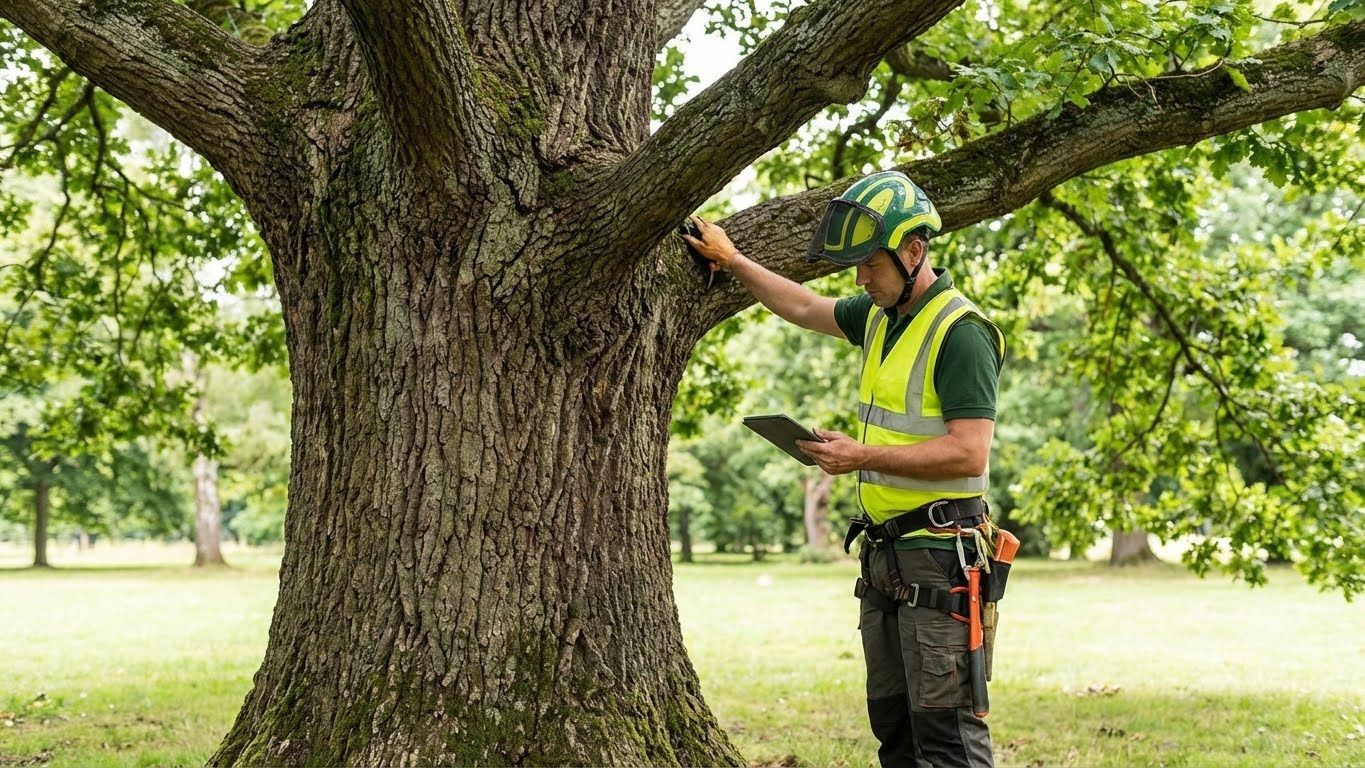
A TRAQ-qualified arborist follows the ISA Tree Risk Assessment methodology to evaluate the likelihood of tree failure, the likelihood of impacting a target, and the potential consequences if failure occurs. During a professional tree risk assessment, certified tree risk assessors evaluate structural defects, root conditions, canopy health, site factors, occupancy patterns, and nearby targets to determine the overall level of risk and appropriate mitigation options.
Homeowners, HOAs, contractors, insurance companies, and city permitting departments rely on TRAQ assessments when:
TRAQ assessments are commonly used to:
TRAQ arborists evaluate five primary factors during a professional tree risk assessment: Tree Identification – Species, size, and overall condition Defect Identification – Decay, cavities, cracks, and structural defects Likelihood of Failure – Probability the tree or branch will fail Likelihood of Impact – Probability a target will be struck Consequences of Failure – Severity of potential damage or injury These factors combine to produce an overall risk rating of Low, Moderate, High, or Extreme.
Every tree risk assessment follows ISA TRAQ methodology and is performed by a qualified arborist trained in hazard tree evaluation. Assessments may be completed for tree safety concerns, permit applications, insurance documentation, development projects, HOA requirements, or when a property owner needs a professional opinion regarding tree failure potential.
We discuss site concerns, tree history, recent incidents, property conditions, and the client’s objectives before beginning the assessment.
We evaluate visible tree condition, root collar conditions, canopy health, structural defects, site constraints, and nearby targets.
We document tree size, species, condition, site factors, photographs, and field measurements using professional arborist tools.
We identify likelihood of failure, likelihood of impact, consequences, target occupancy, environmental factors, and species-specific failure patterns.
We provide practical mitigation options such as pruning, load reduction, cabling, bracing, monitoring, soil remediation, or removal when warranted.
We deliver a clear, defensible arborist report suitable for permitting, insurance documentation, property planning, or legal review.
Many property owners search for a tree health assessment when they are concerned about the condition of a tree on their property. While tree health evaluations focus on issues such as disease, pest activity, canopy vigor, and overall tree vitality, a Tree Risk Assessment goes one step further by evaluating the likelihood of structural failure and the potential consequences if the tree fails.
During a professional arborist inspection, both factors are typically evaluated together. Our ISA Certified Arborists assess tree health, structural stability, root conditions, soil environment, and surrounding targets to determine whether a tree is safe to retain, requires pruning or mitigation, or should be removed due to unacceptable risk.
In this way, a tree risk assessment often includes elements of a tree health assessment, providing property owners with a complete understanding of a tree’s condition and safety.
TRAQ-qualified arborists are specially trained to evaluate tree failure potential and risk to people, property, and infrastructure. Tree Risk Assessment Qualification (TRAQ) is an advanced ISA credential recognized throughout the arboriculture industry. Our TRAQ-qualified arborists provide professional tree risk assessments, hazard evaluations, and defensible recommendations for homeowners, HOAs, contractors, attorneys, and municipalities throughout the Puget Sound region.
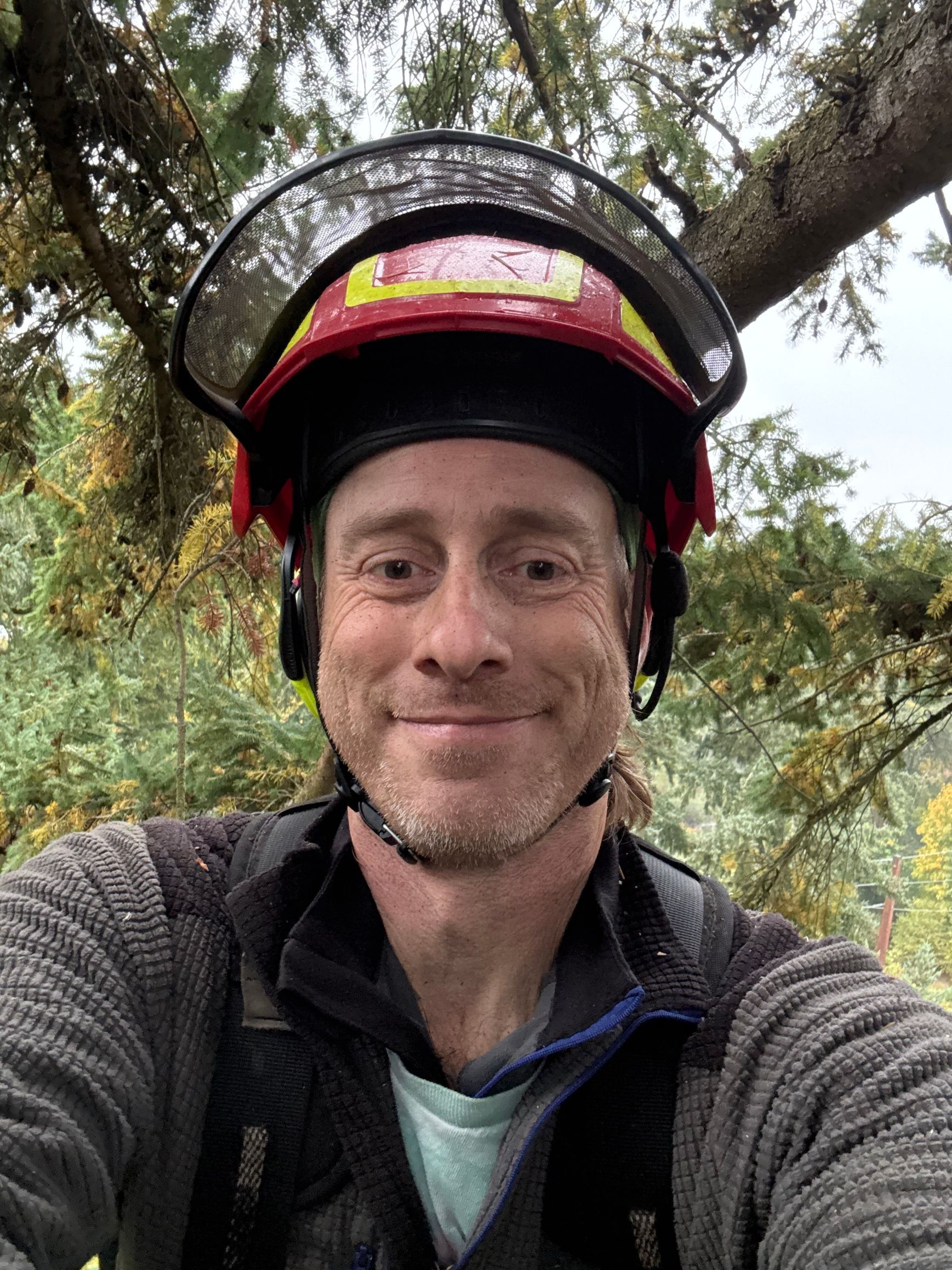
ISA Certified Arborist PN-9290A
🔗
TRAQ Qualified Tree Risk Assessor🔗
Eric performs TRAQ tree risk assessments, hazard tree evaluations, and arborist consulting for permit-sensitive projects throughout Seattle and the Puget Sound region. His recommendations help property owners, contractors, and municipalities make informed tree management decisions.
Trusted by homeowners, HOAs, contractors, attorneys, and municipalities throughout the Puget Sound region.
In many permit and municipal-review cases, the tree risk assessment must also be documented in a formal arborist report, so these services are often bundled.The cost of a professional Tree Risk Assessment depends on the number of trees evaluated, the level of documentation required, site access, nearby targets, municipal permitting requirements, and whether advanced inspection methods are necessary. Tree Risk Assessments are commonly performed for permit applications, insurance concerns, hazard evaluations, development projects, and trees located near homes, roads, utilities, playgrounds, parking areas, or other occupied spaces.
| Service | Typical Cost |
|---|---|
| Basic Visual Tree Risk Assessment | $250–$500+ |
| TRAQ Assessment with Arborist Report | $750–$1,500+ |
| Advanced Climbing or Aerial Inspection | $750–$2,500+ |
| Development or Municipal Review | $1,000–$5,000+ |
Tree risk assessment pricing depends on the number of trees evaluated, the level of documentation required, site access, nearby targets, and whether permitting or insurance documentation is needed. Assessments involving ECAs, shoreline properties, development projects, advanced decay investigations, or climbing inspections typically require additional time and documentation. For permit-sensitive projects, report writing and supporting documentation may account for a significant portion of the total cost.
These terms are often used interchangeably, but they do not mean exactly the same thing.
A tree may have defects such as decay, cavities, root damage, severe lean, weak branch attachments, or previous failures without presenting an immediate emergency. A qualified arborist can perform a tree risk assessment to evaluate the likelihood of failure, what could be struck, and the potential consequences.
Common warning signs include:
A tree considered high risk may still be standing in a relatively stable condition while the owner arranges documentation, permitting, mitigation, or removal.
An imminent hazard is more urgent. This may involve active failure, sudden movement, a newly split trunk, a partially fallen tree, or another condition requiring immediate action to protect people or property.
A TRAQ-qualified arborist can document the tree’s condition and recommend monitoring, pruning, cabling, restricted access, or removal. When formal documentation is required, the findings may also be presented in an arborist report.
An arborist evaluates tree risk using professional assessment methods, but the city or reviewing agency decides whether the tree meets its legal or regulatory standard for removal.
Requirements vary by jurisdiction. A tree that has defects or receives an elevated risk rating does not automatically qualify for removal under every municipal code. Some cities require a specific risk level, supporting photographs, an arborist report, permit documentation, public notice, mitigation, or replacement planting.
Seattle regulates tree removal based on the tree’s classification, property conditions, permit status, and whether the situation qualifies as hazardous or requires emergency action. Environmentally Critical Areas, street trees, protected trees, and development sites can receive additional oversight. For projects outside Seattle, requirements may differ by city, so the applicable local tree code should be reviewed before removal or mitigation work begins.
Get answers to common questions about TRAQ tree risk assessments, hazard tree evaluations, permitting requirements, insurance documentation, and professional arborist recommendations.
Not always. Whether a Tree Risk Assessment is required depends on local tree regulations, site conditions, and the reason for the proposed work. However, many municipalities require a professional Tree Risk Assessment when requesting removal of protected trees, trees within Environmentally Critical Areas (ECAs), shoreline jurisdictions, steep slopes, or trees associated with permit applications.
A TRAQ assessment documents tree condition, structural defects, potential targets, and failure risk, providing municipalities, insurance companies, and property owners with objective information to support decision-making.
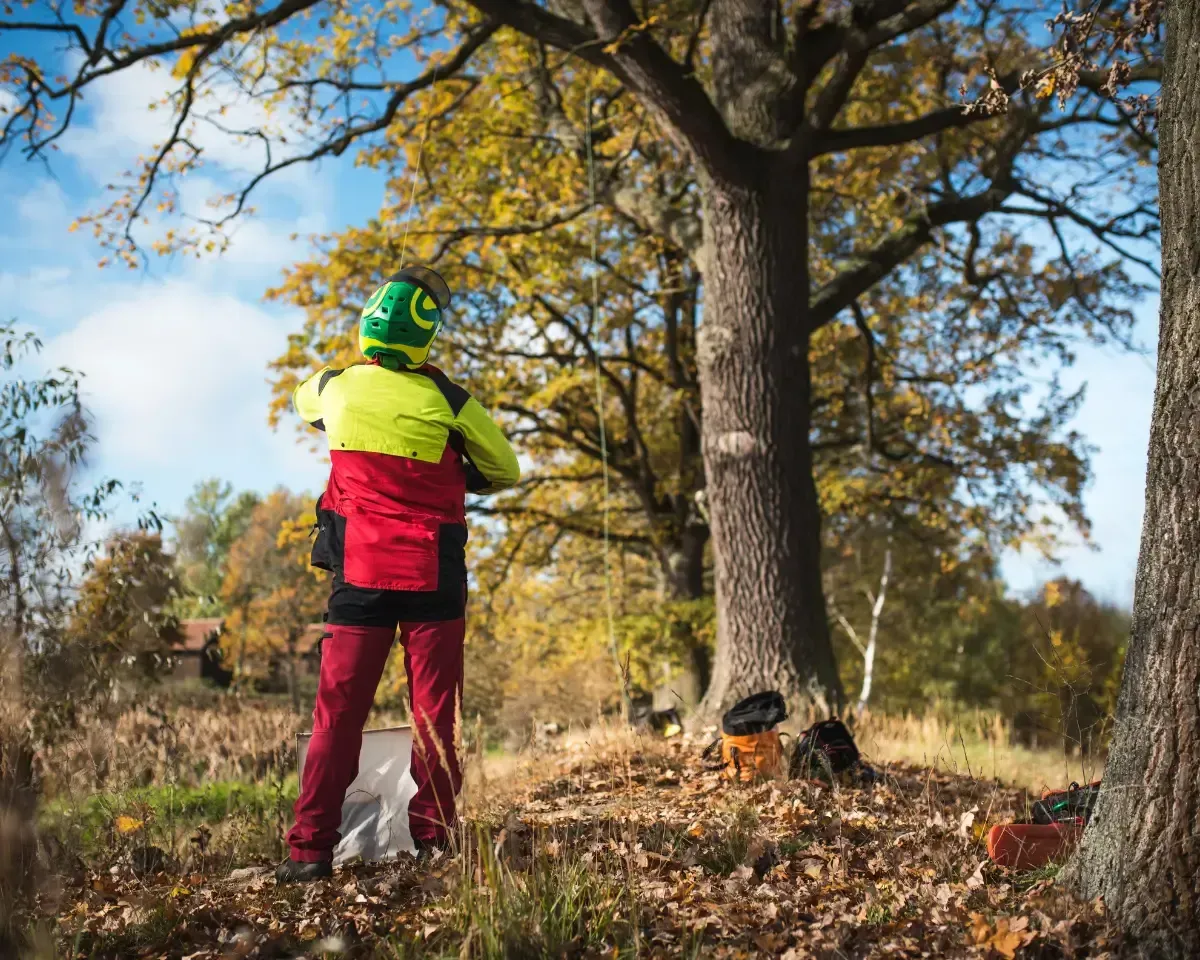
Most residential Tree Risk Assessments take between 30 minutes and 2 hours onsite, depending on the number of trees, property access, and assessment complexity.
Projects involving multiple trees, climbing inspections, root investigations, municipal permitting, or formal written reports may require additional field time and documentation.
Most Tree Risk Assessments are performed from the ground using visual inspection techniques. However, some situations require advanced inspections to collect additional information that cannot be observed from the ground.
When necessary, our ISA Certified Arborists may perform climbing inspections, aerial inspections, root collar excavations, or advanced decay investigations to better evaluate structural defects and potential hazards.
es. We frequently provide arborist reports and Tree Risk Assessments for insurance claims involving storm damage, fallen trees, property damage, and disputed tree conditions.
Our reports can document tree health, structural defects, failure characteristics, and pre-existing conditions to assist property owners, adjusters, attorneys, and insurance carriers.
That is often valuable information. Not every tree with deadwood, lean, cavities, or visible defects requires removal.
A professional Tree Risk Assessment may identify preservation options such as pruning, cabling, bracing, monitoring, root zone improvements, or other mitigation measures that reduce risk while retaining the tree.
Most residential Tree Risk Assessments cost between $450 and $1,500+, depending on the number of trees, documentation requirements, site complexity, and whether a formal written report is needed.
Projects involving municipal permitting, insurance claims, climbing inspections, development review, or multiple trees typically require more extensive analysis and documentation.
Explore additional resources covering tree risk assessment costs, hazard tree evaluations, TRAQ methodology, and professional arborist guidance for homeowners, contractors, HOAs, and property managers.
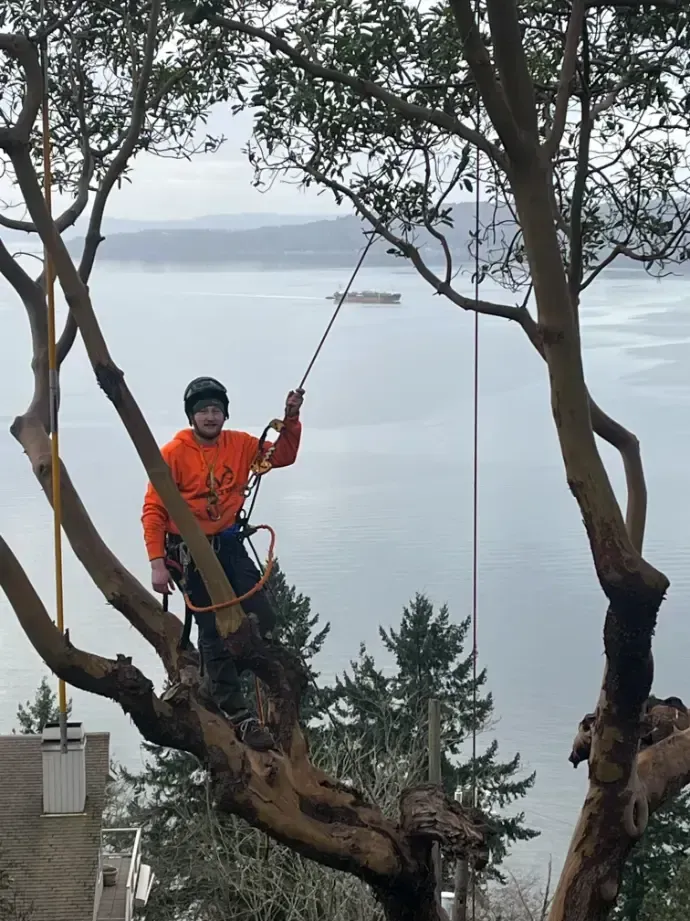
Get a professional tree risk assessment from an ISA TRAQ-qualified arborist. We provide hazard tree evaluations and defensible recommendations throughout Seattle, Bellevue, and the Puget Sound region.
✅ ISA TRAQ Tree Risk Assessments
✅ Hazard Tree Evaluations
✅ Permit & ECA Documentation
✅ Insurance & Liability Assessments
🧰 ISA Certified Arborists, TRAQ-Qualified
⭐ 5-Star Rated on Google, Yelp & Facebook
🛡️ Licensed, Insured & Code-Compliant
🥇 Local expertise in Seattle tree codes & ECAs
📝 Request a Tree Risk Assessment
📞 Call us now at
206-486-7790
– Click to call!
📍 Serving Seattle, Bellevue, Tacoma, Issaquah & the Puget Sound Region
Sound Tree Care LLC Operations
(Not Open to Public)
3057 S 146th St SeaTac, WA 98168
Office Hours
Mon–Fri: 8:00 AM – 4:00 PM

ISA-Certified Arborists Serving Seattle
✅ Tree Removal
✅ Tree Pruning
✅ Stump Grinding
✅ Arborist Reports
✅ Tree Risk Assessments