Tree Removal Responsibility in Washington State

Tree Removal Responsibility in Washington State can be confusing—especially when a tree is damaged, leaning, shared between properties, or has already failed. Homeowners often ask the same questions: Who is responsible for removing the tree? Who pays for the work? And what happens if a neighbor is involved?

This guide explains how responsibility for tree removal is typically determined under Washington State law, including situations involving fallen trees, boundary or shared trees, storm damage, and trees that pose a potential hazard. We focus on practical, real-world scenarios property owners commonly face—without legal jargon or guesswork.

Written from the perspective of ISA Certified Arborists who regularly evaluate trees involved in disputes, insurance claims, and permit applications, this resource provides clear, experience-based guidance to help homeowners understand their responsibilities before conflicts escalate or costly mistakes are made.
For related topics, explore our resources on Washington Tree Laws and tree ownership and boundary trees, which cover permitting, timber trespass, and unauthorized tree removal in more detail.

Content Authorship & Review

This page is written and reviewed by ISA Certified Arborists to support clear, accurate guidance for homeowners in the Puget Sound region.

Written By
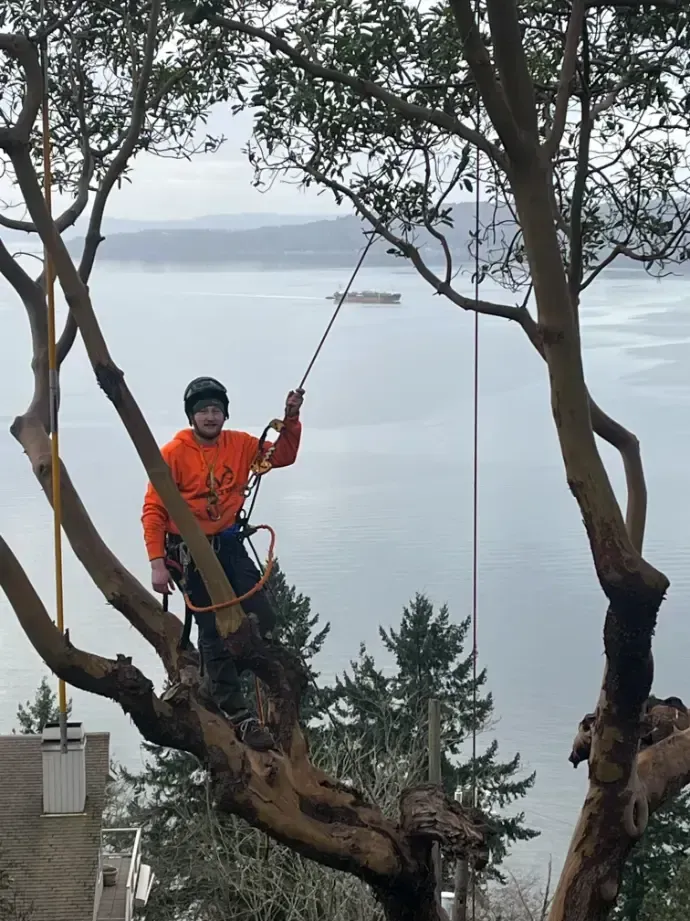
AJ Flanagan, ISA Certified Arborist

AJ Flanagan

Assistant Operations Manager

ISA Certified Arborist (PN-374999A)

AJ supports on-site assessments and practical recommendations for tree pruning, removals, and safety decisions across the Puget Sound region. This page reflects field experience and current arboricultural standards.

Reviewed By
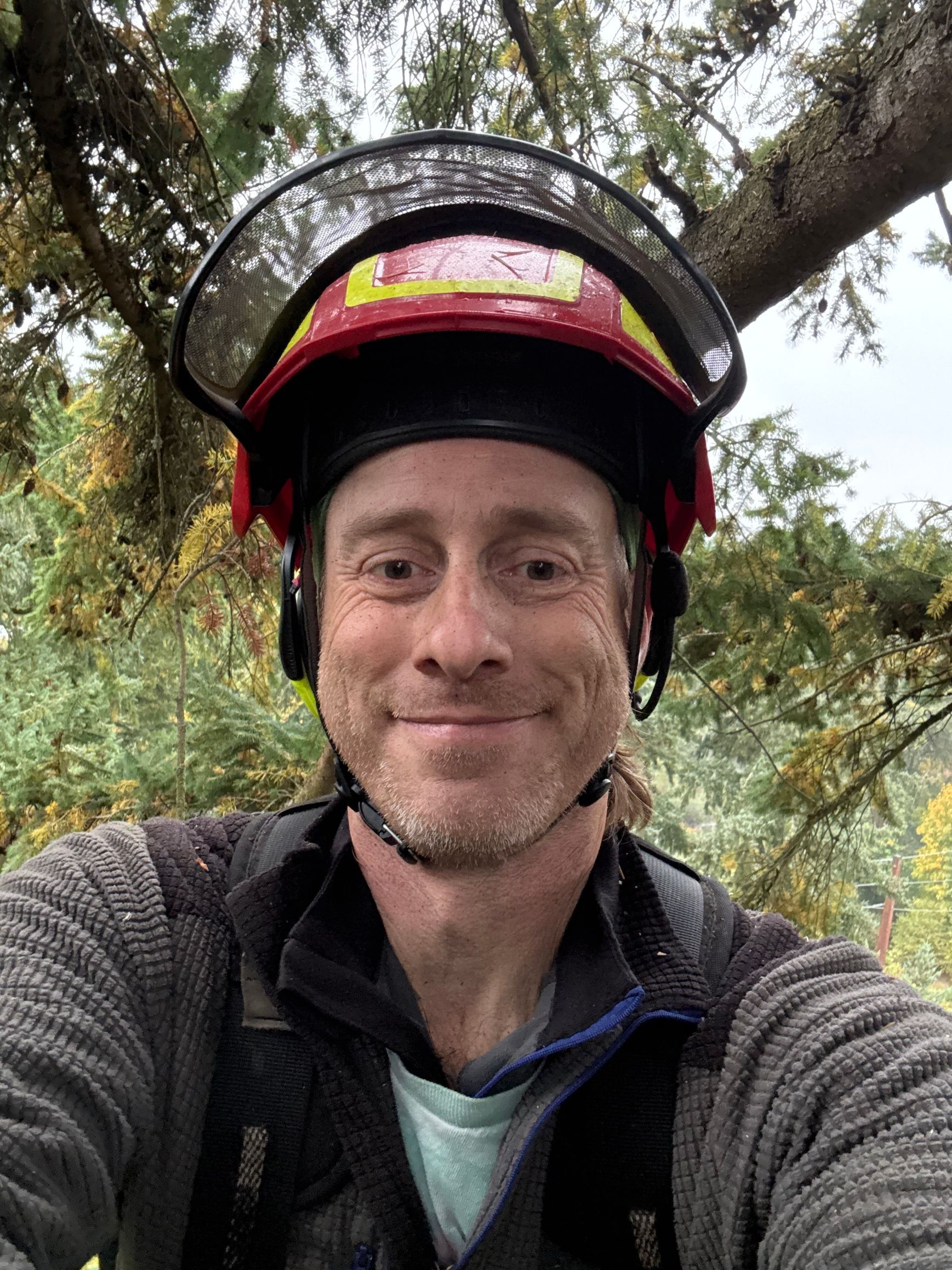
Eric Ledford, ISA Certified Arborist and TRAQ Qualified Tree Risk Assessor

Eric Ledford

Founder, Sound Tree Care LLC

ISA Certified Arborist (PN-9290A) • TRAQ • NUCA Dig Safe

Eric reviewed this page for accuracy and alignment with ISA best practices, ANSI A300 guidance, and common municipal permitting considerations in the Puget Sound region. This content is informational and not legal advice.

Let’s Clarify Tree Removal Responsibility — The Sound Way

This Tree Removal Responsibility guide is written and reviewed by ISA Certified Arborists with hands-on experience assessing trees involved in neighbor disputes, storm damage claims, insurance investigations, and permit-regulated removals throughout Washington State.

Our arborists are routinely asked to document:

  • Which property a tree originates from
  • Whether a tree is shared or boundary-located
  • Tree condition before and after failure
  • Whether a tree presented a foreseeable hazard
  • Whether removal, pruning, or monitoring was reasonable and defensible


Why Arborist Expertise Matters in Responsibility Questions

Questions about tree removal responsibility are rarely about opinions—they’re about facts:

  • Where the trunk and root plate are located
  • Whether failure was sudden or predictable
  • Whether prior defects or decay were present
  • Whether proposed work affects safety or stability
  • Whether the situation meets permitting or insurance thresholds

An ISA Certified Arborist can provide objective, documented findings that support productive conversations between neighbors—and, when needed, documentation that holds up under municipal review, insurance claims, or legal scrutiny.

While this page does not provide legal advice, it reflects real-world arboricultural standards and Washington State regulations that property owners commonly encounter when questions arise about who is responsible for tree removal and why.

How Tree Ownership Is Determined in Washington State

In Washington State, questions about who is responsible for tree removal usually start with one key detail: who owns the tree. Ownership is most commonly determined by where the trunk originates at ground level—not where branches hang or where roots travel underground.

Here’s the simple framework property owners use to understand ownership (and why it matters):

  • Trunk fully on one property: That property owner typically owns the tree and is usually responsible for decisions like pruning, maintenance, and removal.
  • Trunk straddles the boundary line: The tree is often treated as a shared/boundary tree, meaning both property owners may have rights and responsibilities.
  • Branches overhang or roots encroach: Overhang and root encroachment can affect maintenance and disputes, but they don’t automatically change ownership.

Because responsibility questions can involve insurance, safety, neighbor disputes, or permits, it’s often worth documenting the basics before anyone starts cutting—especially when the trunk location is unclear.

Rule of thumb

Ownership usually follows the trunk

In most Washington State scenarios, tree ownership is determined by where the trunk is rooted at ground level—not by where branches hang overhead.

  • Trunk fully on one parcel: that owner typically controls maintenance and removal decisions.
  • Overhang doesn’t equal ownership: branches crossing a property line don’t automatically transfer rights.
  • Roots are tricky: underground spread can create conflicts, but it usually doesn’t change who owns the tree.

Why it matters: ownership is often step one in figuring out who is responsible when a tree fails or needs removal.

Boundary trees

If the trunk is on the line, treat it as shared

When the trunk straddles a property boundary, the tree is commonly treated as a shared (boundary) tree. That can change what’s “reasonable” for pruning or removal.

  • Shared rights: both neighbors typically have an interest in the tree.
  • Shared responsibility: removal decisions often require coordination and clear documentation.
  • Dispute risk: unilateral cutting/removal can escalate quickly—especially if damage occurs.

Tip: if you suspect a boundary tree, document the trunk location before any work begins.

When it’s unclear

How to verify tree location the practical way

If the trunk location isn’t obvious (slopes, fences, hedges, ivy, or buried root flares), a quick fact-check can prevent expensive mistakes.

  • Expose the root flare: vines, mulch, or soil buildup can hide where the tree truly originates.
  • Confirm the property line: fences and landscaping aren’t always accurate boundary markers.
  • Document the condition: photos + a basic arborist assessment can help with insurance or disputes.

If you’re planning removal or filing a claim, an ISA Certified Arborist can document tree location and condition in a defensible way.

Who Pays for Tree Removal When a Tree Falls in Washington State?

Washington state map graphic with evergreen tree s

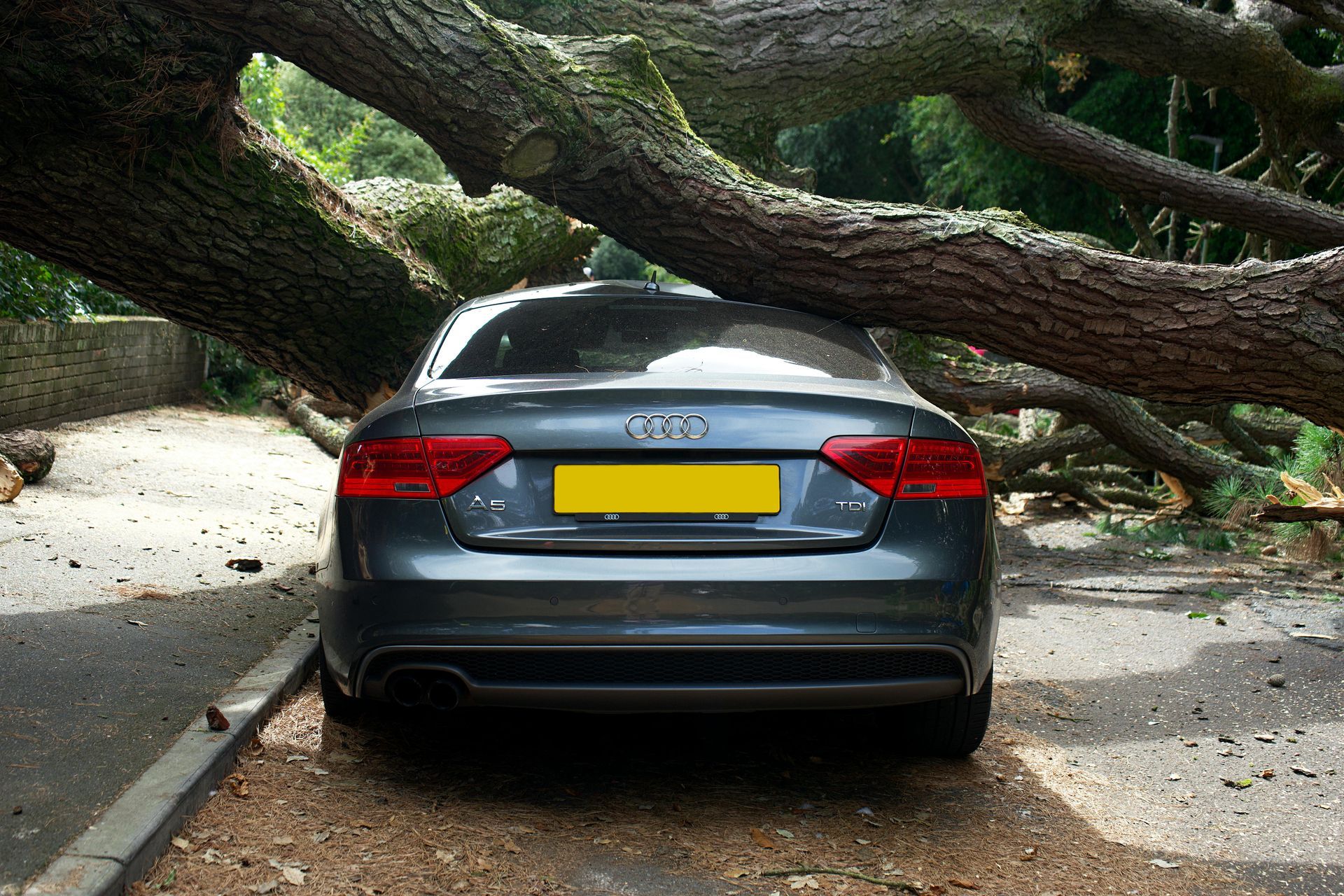
In Washington State, responsibility for paying for tree removal after a failure is usually determined by one simple factor: where the tree lands.


In most cases, the property owner where the tree or debris falls is responsible for cleanup — regardless of who owned the tree, whether the failure was caused by wind or snow, or whether the tree appeared healthy before it fell.


Insurance coverage typically follows the same rule: insurers pay to remove tree debris only from insured property, and usually only up to the property line.

Core rule

Where the tree lands usually determines who pays

In most Washington State situations, the cost of tree cleanup after a failure is determined by where the tree (or debris) falls —not who owned the tree, and not what caused the failure.

  • Falls on your property: you’re typically responsible for removing it.
  • Falls on a neighbor’s property: they’re typically responsible for cleanup on their side.
  • Storms & “acts of nature”: wind, snow, and saturated soil usually don’t change the basic rule.
Takeaway: Payment responsibility usually follows impact location, not ownership.
Insurance reality

Insurance coverage usually stops at the property line

Homeowners insurance typically pays for removing tree debris only when it involves insured property —and usually only up to the property line.

  • Covered: removing a fallen tree from a damaged home, garage, driveway, or fence (when covered).
  • Not covered: removing the portion still on a neighbor’s property (even if it’s your tree).
  • Common limit: debris removal is often authorized only for the affected/insured area.
Note: Adjusters may approve limited extra clearance when needed to rebuild an insured structure (like a fence), but decisions vary by policy and claim details.
The exception

Foreseeable risk can shift responsibility—if it’s documented

The main scenario that can change the “where it fell” rule is when there is clear evidence that a hazard was foreseeable and ignored before the failure.

  • Documented defects: decay, severe lean, root issues, prior failures, or structural weakness.
  • Clear notice: written communication to the tree owner before the incident (photos help).
  • Defensible record: an arborist report or letter can support insurance review or dispute resolution.
Important: Foreseeable risk is an exception—not the default—and it’s evaluated case by case.

How to Reduce Risk and Protect Yourself Before a Tree Fails

While payment after a tree failure usually depends on where the tree lands, responsibility before a failure is about whether reasonable steps were taken to identify and address risk. In Washington State, proactive documentation can help protect property owners, reduce disputes, and clarify responsibility if a tree later fails.

Prevention

Start with routine assessment and maintenance

Before a tree fails, “responsibility” is often about whether reasonable steps were taken to identify and reduce risk. Regular maintenance can also prevent minor defects from becoming big problems.

  • Watch for red flags: dead tops, decay, cracks, severe lean, or recent root disturbance.
  • Maintain clearance: keep limbs off roofs, power service lines, and high-traffic areas.
  • Document upkeep: photos and invoices help show the tree was maintained responsibly.
Tip: If a tree is near a home or frequently used area, schedule periodic professional evaluation.
Documentation

Put concerns in writing before there’s damage

If you’re concerned about a tree (especially a neighbor’s), clear documentation is the simplest way to protect yourself and keep conversations productive.

  • Take dated photos: include the base, canopy, defects, and nearby targets (home, fence, driveway).
  • Send a calm written note: describe the concern and suggest an arborist assessment.
  • Keep records: save messages, letters, and any arborist findings in one folder.
Why it matters: Foreseeable risk arguments typically depend on what was known before the failure.
Arborist support

Use an arborist letter or report when risk is measurable

An ISA Certified Arborist can document tree condition, defects, and targets in a way that’s objective and defensible— helpful for neighbors, permits, and insurance review.

  • Clear, professional findings: condition, defects, likelihood of failure, and target impact.
  • Reasonable recommendations: prune, monitor, mitigate, or remove—based on risk.
  • Better outcomes: reduces guesswork and helps resolve disputes before they escalate.
Best practice: If tensions are high, consider sending key documentation via certified mail for proof of notice.

What Happens When Tree Removal Becomes a Dispute?

Even when ownership and payment rules are clear, tree-related situations can still turn into disputes. Disagreements most often arise when neighbors have different expectations, when work is done without consent, or when insurance coverage doesn’t align with what someone believes is “fair.”

Understanding how these disputes typically unfold can help property owners respond calmly, document appropriately, and avoid escalating the situation unnecessarily.

Neighbor disputes

When neighbors disagree about removal or responsibility

Most tree disputes aren’t really about the tree—they’re about expectations. Problems usually start when one person wants immediate action and the other wants to wait, or when ownership/boundary details are unclear.

  • Avoid unilateral action: cutting or removing without alignment can escalate fast.
  • Clarify the basics: trunk location, boundary lines, and where debris landed after a failure.
  • Keep it document-based: photos, written notes, and a calm timeline reduce “he said / she said.”
Best move: If you’re stuck, an ISA Certified Arborist can provide a neutral, fact-based assessment to guide next steps.
Unauthorized work

When a tree is cut or removed without permission

In Washington State, disputes can become serious when a tree is cut across a property line or removed without the owner’s consent. This can happen with neighbor misunderstandings—or when a contractor acts on incorrect assumptions.

  • Confirm the boundary: fences and landscaping aren’t always accurate markers.
  • Stop work early: if there’s uncertainty, pause and verify before more cutting occurs.
  • Document immediately: photos of cuts, stump location, equipment tracks, and debris can matter later.
Related: See our Timber Trespass in Washington resource for a deeper explanation of unauthorized cutting and potential liability.
Insurance friction

When insurance coverage is limited or denied

Insurance disputes often come down to scope: what’s insured, what’s considered “necessary” to remove, and where coverage stops. Most policies focus on insured property, not general cleanup.

  • Property-line limits: removal is often approved only up to the boundary of the insured property.
  • No damage, limited coverage: if nothing insured was hit, coverage may be reduced or denied.
  • Better documentation helps: an arborist report can clarify tree condition, failure factors, and necessary work scope.
Tip: Keep a clear photo record of damage, debris location, and pre-existing defects—before cleanup starts.

✅Key Takeaways for Tree Removal Responsibility in Washington State

Tree removal responsibility in Washington State is often misunderstood, but the core rules are simpler than many people expect. Ownership usually determines who can make decisions about a tree, while payment after a failure is typically based on where the tree lands and whether insured property was damaged. Insurance coverage generally follows the same logic, with cleanup approved only for insured areas and often limited to the property line.

Disputes most often arise when expectations don’t match reality, documentation is missing, or work happens without clear consent. Understanding these fundamentals—and taking reasonable steps to document concerns before a tree fails—can help property owners reduce conflict, protect themselves financially, and make informed decisions when trees become a shared concern.

💬 Frequently Asked Questions About Tree Removal Responsibility in Washington State

Tree removal responsibility can be confusing, especially when trees fall across property lines, damage structures, or involve neighbors and insurance claims. Below are answers to the most common questions Washington State homeowners ask about who pays for tree removal, how insurance typically responds, and when responsibility may shift. These answers reflect common real-world scenarios—not legal advice—and are intended to help clarify expectations before conflicts arise.

  • ❓Who pays when my neighbor’s tree falls on my property?

    In most Washington State situations, the property owner where the tree or debris lands is responsible for cleanup. That usually means you—or your homeowners insurance—pay to remove the portion of the tree that falls on your property, even if the tree originally belonged to your neighbor.


    This rule generally applies regardless of whether the tree fell due to wind, snow, saturated soil, or other natural causes.

  • ❓Does homeowners insurance pay for tree removal in Washington State?

    Homeowners insurance typically pays for tree removal only when insured property is damaged, such as a home, garage, fence, or driveway (if covered under your policy). Coverage is usually limited to removing debris from the insured area, not general yard cleanup.


    In many cases, insurers approve removal only up to the property line, even if the tree came from a neighboring property.

  • ❓What if my tree falls on my neighbor’s house?

    If your tree falls onto your neighbor’s property and damages insured structures, your neighbor’s homeowners insurance usually handles cleanup and repairs on their side of the property line.


    You are not automatically responsible for removal costs simply because the tree originated on your property—unless there is clear evidence that the tree posed a foreseeable hazard that was ignored.

  • ❓Does it matter if the tree was healthy or unhealthy before it fell?

    For insurance and cleanup purposes, tree health usually does not change who pays after a failure. Healthy trees fall all the time due to storms, wind, or soil conditions.


    Tree condition typically becomes relevant only if there was documented evidence that the tree posed a foreseeable risk before it failed—such as known decay, severe lean, or prior failures.

  • ❓Can I make my neighbor pay if I warned them about a dangerous tree?

    Possibly—but only in limited, well-documented situations.


    Responsibility may shift if there is clear proof that:


    The tree posed a foreseeable hazard


    The owner was notified in writing before the failure


    The risk was reasonable and documented (often by an arborist)


    Even then, responsibility is evaluated case by case and is not automatic.

  • ❓What if a tree is shared or on the property line?

    Trees with trunks that straddle a property line are often considered shared (boundary) trees, meaning both neighbors may have ownership interests.


    However, when a shared tree fails, payment responsibility usually still follows where the tree or debris lands, not shared ownership. Cleanup and insurance coverage are typically handled by the property owner where damage occurs.

  • ❓Should I get an arborist involved before or after a tree falls?

    Both can be helpful—depending on timing.


    Before a failure: An ISA Certified Arborist can document tree condition, identify foreseeable hazards, and provide written assessments that help with prevention, communication, and risk management.


    After a failure: An arborist can document damage, failure factors, and tree condition in a defensible way that supports insurance claims or dispute resolution.


    In many situations, early documentation helps reduce conflict and uncertainty later.

When tree responsibility is unclear or documentation matters, an ISA Certified Arborist can help assess the situation and provide clear, defensible guidance.