Arborist pricing varies significantly depending on the complexity of the tree, the level of assessment required,
municipal permitting considerations, and whether formal documentation or tree risk analysis is needed.
Unlike standard tree trimming estimates,
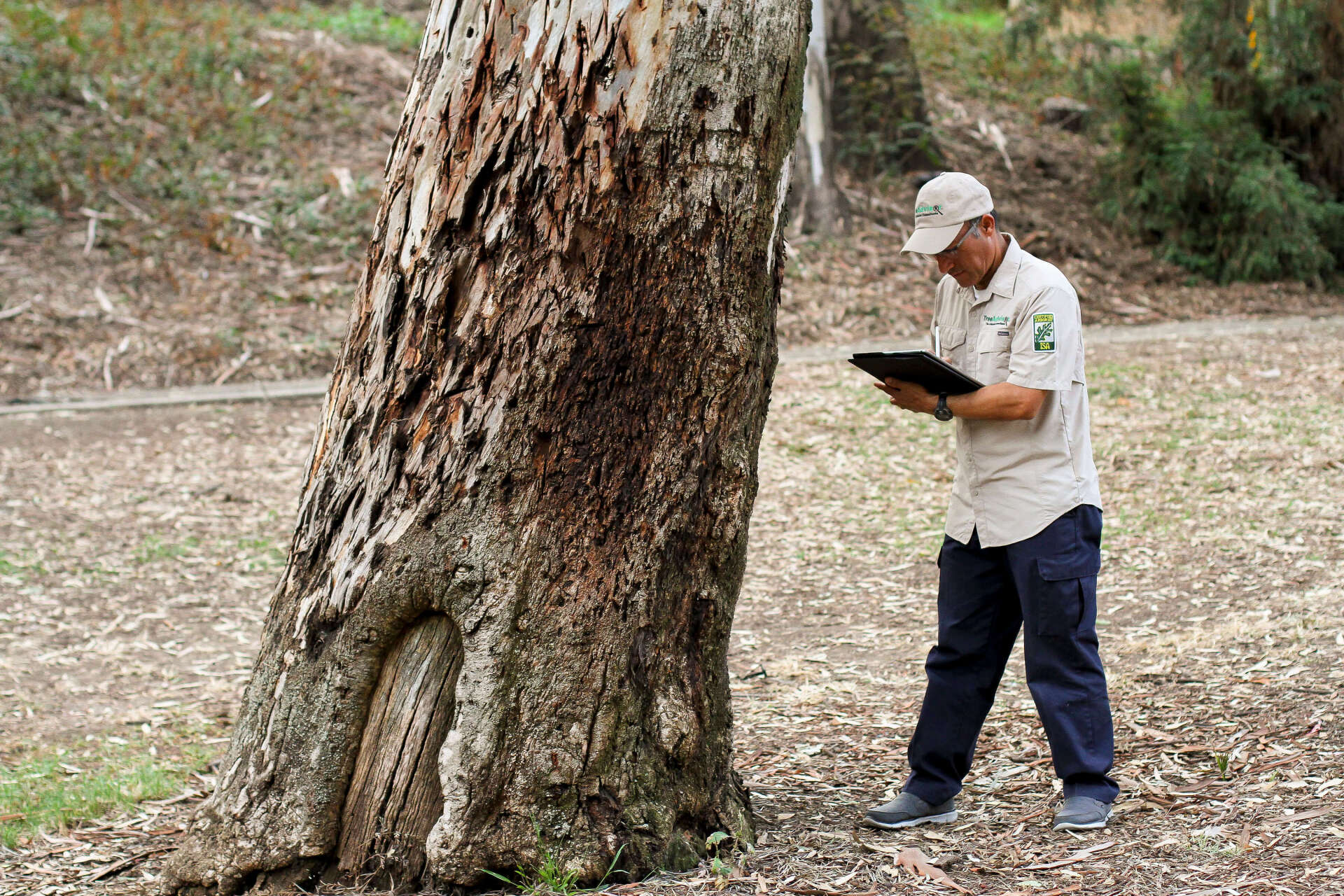
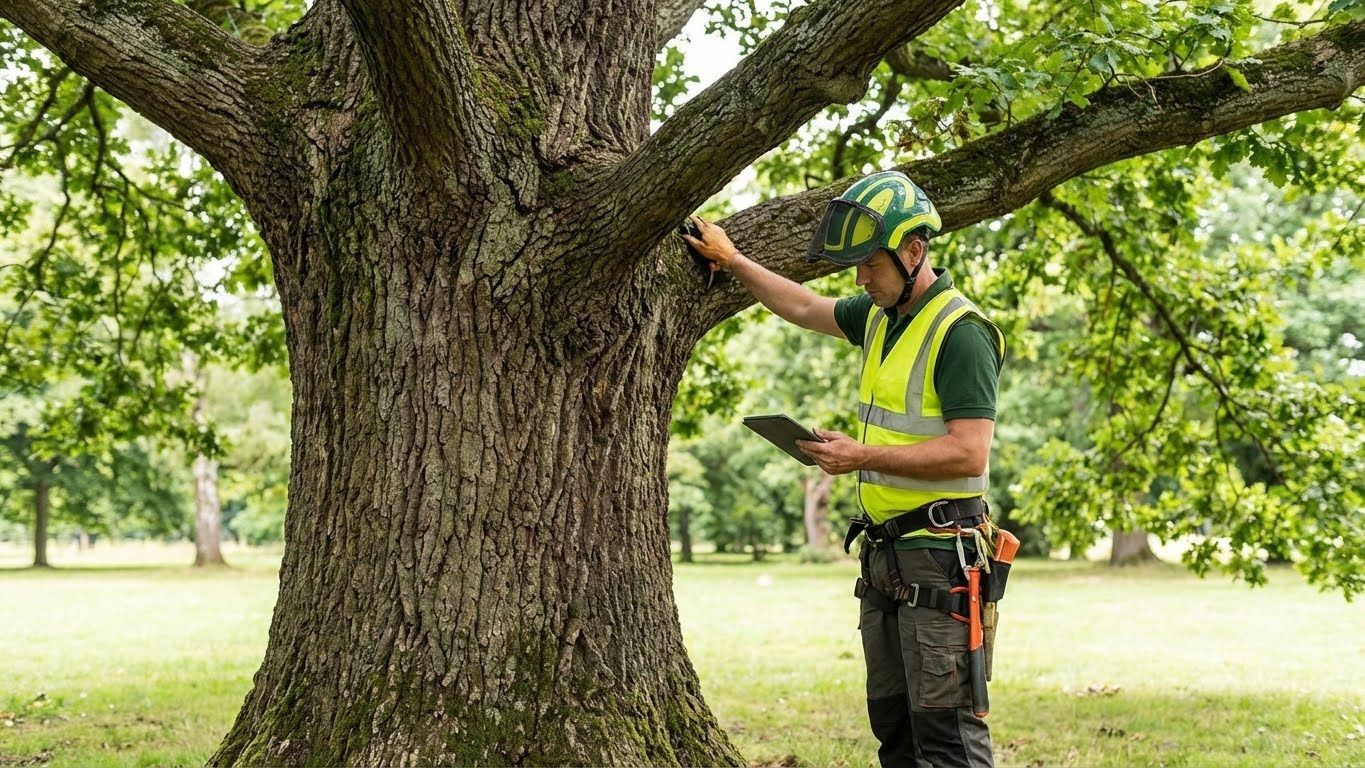
professional arborist consulting may involve technical inspections, risk analysis, permitting support, municipal compliance review, utility hazard evaluation, and formal written documentation performed by an
ISA Certified Arborist.
Note: Pricing varies based on tree size, site complexity, municipal requirements, documentation needs, accessibility, and the number of trees involved.
The cost of hiring an arborist can vary depending on:
What Affects Arborist Cost?
• Type of inspection required
• Complexity of the site
• Tree size and condition
• Utility conflicts
• Permitting requirements
• Construction impacts
• Whether a written report is needed
Common Arborist Services
• Tree inspections
• Arborist reports
• Tree risk assessments
• Permit consulting
• Construction impact evaluations
• Root investigations
• Preservation planning
• Insurance documentation
• Municipal compliance assessments
Basic Arborist Consultation
$195–$350
General tree inspection, consultation, site visit, or preliminary arborist assessment without formal written reporting.
Arborist Report
$450–$2,500+
Formal written documentation for permits, insurance claims, construction projects, municipal review, or tree risk concerns.
Tree Risk Assessment
$250–$1,500+
Advanced hazard assessment involving structural defects, targets, failure potential, and mitigation recommendations. TRAQ hazard evaluation and mitigation planning.
Construction Impact Assessment
$500–$5,000+
Site-specific evaluations involving excavation impacts, development review, municipal compliance, or preservation planning.
Several Factors Can Increase Arborist Costs
🌲 Large or hazardous trees
⚡ Utility line conflicts
🏛 Municipal permitting requirements
🌿 Environmentally critical areas
🪵 Structural defects or decay
📋 Formal written reporting
🏗 Construction impact analysis
📷 Advanced documentation or mapping
🚧 Difficult site access
⚠️ Emergency assessments
Tree Risk Assessment Cost
A
Tree Risk Assessment is a specialized arborist evaluation used to determine the likelihood of tree or branch failure, the potential targets that could be impacted, and the consequences of that failure. These assessments are commonly requested when trees are located near homes, roads, utility infrastructure, playgrounds, parking areas, or other occupied spaces.
Unlike a general tree inspection, a Tree Risk Assessment follows industry-recognized methodologies and focuses specifically on hazard identification, target analysis, and mitigation recommendations.
Typical Tree Risk Assessment Cost
Typical Cost Range:
$250–$1,500+
The final cost depends on the size and number of trees, site complexity, accessibility, documentation requirements, and whether advanced assessment techniques are necessary.
Factors That Can Increase Tree Risk Assessment Costs
🌳 Tree & Site Factors
- Large or mature trees
- Multiple trees requiring assessment
- Difficult site access
- Steep slopes or environmentally critical areas
- Utility line conflicts
📋 Assessment Factors
- Formal written reports
- Municipal permit requirements
- Insurance claim documentation
- Advanced decay investigations
- Climbing or aerial inspections
Common Tree Defects Evaluated During Risk Assessments
Levels of Tree Risk Assessment
Most residential assessments involve a ground-based visual inspection. However, some situations require more advanced investigation methods.
When a Tree Risk Assessment May Be Recommended
A professional Tree Risk Assessment is often recommended when:
- A tree has visible decay or structural defects
- A tree has recently lost large limbs
- Construction activities have impacted roots
- A municipality requires documentation for removal permits
- An insurance company requests a professional opinion
- A homeowner is concerned about a tree near a structure
- A neighboring tree dispute requires expert evaluation
Important:
Tree Risk Assessments evaluate the likelihood of failure and potential consequences, but they do not guarantee future tree performance. Trees are living organisms, and risk levels can change over time as site conditions, weather, and tree health evolve.
Tree Health Assessment Cost
A professional tree health assessment is typically performed when a tree shows signs of decline, abnormal growth patterns, pest activity, disease symptoms, or other indicators of stress. Unlike a routine tree estimate, a health assessment focuses on diagnosing the underlying cause of the problem and developing recommendations to improve the tree's long-term condition.
Tree health assessments commonly investigate:
- Declining vigor or canopy dieback
- Insect and pest infestations
- Root damage or root zone disturbances
- Soil compaction and drainage problems
- Nutrient deficiencies and fertility concerns
- Fungal diseases and decay organisms
- Environmental stress factors
- Construction-related impacts
Typical Tree Health Assessment Cost
Typical Cost Range:
$250–$750+
The final cost depends on the number of trees involved, the complexity of the diagnosis, site access, whether laboratory testing is required, and whether formal written documentation is requested.
Factors That Can Increase Tree Health Assessment Costs
🌳 Tree Factors
- Large or mature trees
- Multiple affected trees
- Advanced decline symptoms
- Root zone investigations
- Climbing inspections
🔬 Diagnostic Factors
- Pest identification
- Disease diagnosis
- Soil analysis
- Laboratory testing
- Formal written reports
Common Issues Identified During Tree Health Assessments
ISA Certified Arborists frequently diagnose problems such as Bronze Birch Borer infestations, root damage from construction activities, soil compaction, poor drainage, drought stress, nutrient deficiencies, fungal cankers, root rot, and species-specific diseases. Early identification often allows corrective treatments to be implemented before significant decline or tree failure occurs.
Important:
A tree health assessment focuses on diagnosing the cause of decline and recommending corrective actions. If significant structural defects or failure concerns are identified, a separate Tree Risk Assessment may also be recommended.
Typical Cost Range:
$500–$10,000+
The final cost depends on the number of trees, property size, mapping requirements, municipal standards, GPS data collection, and reporting complexity.
Factors That Affect Tree Survey Costs
- Total number of trees
- Property size and accessibility
- Required mapping accuracy
- Municipal reporting requirements
- Environmentally Critical Areas (ECAs)
- Shoreline regulations
- Construction or development review
- GIS or CAD integration requirements
- Formal report preparation
Tree Survey & Tree Inventory Pricing Examples
When Is a Tree Survey Required?
In Seattle, Bellevue, Renton, and many other Puget Sound municipalities, tree surveys and tree inventories are commonly required for development applications, tree protection plans, environmentally critical area reviews, shoreline permitting, and construction projects involving protected trees. These reports help planners, municipalities, and property owners understand existing tree resources and potential development impacts. Tree surveys are frequently required for:
- New construction projects
- Subdivisions and land development
- Municipal permit applications
- Tree protection plans
- Critical area reviews
- Shoreline permitting
- HOA management planning
- Commercial property assessments
- Environmental review processes
Important:
Tree inventories and surveys are fundamentally different from a standard arborist inspection. These projects often involve mapping dozens or hundreds of trees and may require integration with surveyors, engineers, architects, planners, and municipal review agencies.
Common Information Collected During Tree Inventories
🌳 Tree Data
- Species identification
- Diameter measurements (DSH/DBH)
- Tree height estimates
- Crown spread measurements
- Condition ratings
- Structural defect observations
📍 Site & Planning Data
- Tree locations
- GPS mapping
- Protection recommendations
- Development impact review
- Preservation feasibility
- Municipal compliance documentation
Free Tree Estimates vs Professional Arborist Assessments
Many tree service companies provide free estimates for routine pruning or removal work. However, professional arborist consulting involves significantly deeper technical analysis, risk evaluation, permitting considerations, and documentation.
🪚
Free Tree Estimates
Routine estimates are generally focused on labor pricing for pruning, removals, or cleanup work.
• General work pricing
• Basic scope discussions
• Routine pruning or removal
• Limited technical assessment
• Usually sales-oriented
🌲
Professional Arborist Assessments
Arborist consulting may involve technical inspections, hazard analysis, municipal review, preservation planning, and formal documentation.
• Tree risk assessment
• Utility hazard evaluation
• Municipal code review
• Environmental restrictions
• Preservation feasibility
• Root impact assessment
• Formal documentation
Important:
Professional arborist consulting is often fundamentally different from a standard tree work estimate. In many situations, arborists are providing specialized risk analysis, technical documentation, preservation consulting, or municipal compliance expertise rather than simply quoting labor pricing.
Do Arborist Reports Cost More?
Yes. Formal arborist reports are generally more expensive than basic consultations because they require professional documentation, technical analysis, written recommendations, and increased liability exposure.
📄
Standard Report Elements
• Site documentation
• Photographs
• Measurements
• Technical analysis
• Risk assessment
• Written recommendations
• Municipal code considerations
• Professional liability exposure
🌲
Advanced Report Requirements
• Multiple site visits
• Root excavation review
• Climbing inspections
• Advanced decay investigation
• Permit coordination
• Construction meetings
• ECA or shoreline considerations
• Tree preservation planning
Important:
Comprehensive arborist reports involving development projects, environmentally critical areas, insurance claims, tree risk assessments, or municipal permitting can become highly technical consulting documents.
Why ISA Certified Arborists Matter
Professional Training
• Tree biology
• Structural defect identification
• Pruning standards
• Tree risk assessment
• Species-specific failure patterns
Assessment Expertise
• Preservation feasibility evaluations
• Municipal code awareness
• Utility conflict review
• Mitigation planning
• Industry best practices
ISA Certified Arborists are trained to evaluate long-term tree health, structural safety, utility conflicts, preservation options, and realistic mitigation strategies — not simply quote labor pricing for tree work.
How much does an arborist charge per hour?
Professional arborist consulting rates commonly range from approximately $195–$350+ per hour, with many residential consultations costing between $250 and $600+ depending on travel, site complexity, documentation requirements, and whether a written report is needed.
How much does a tree inspection cost?
Basic tree inspections may range from approximately $195–$500+, while advanced tree risk assessments or formal arborist reports may cost significantly more.
How much does a tree risk assessment cost?
Tree risk assessments typically cost between $250 and $1,500+ depending on the number of trees, site complexity, targets present, documentation requirements, and whether advanced inspection methods are necessary. Formal TRAQ-based risk assessments and written reports generally cost more than basic visual inspections.
Do arborists provide free estimates?
Many tree service companies provide free estimates for pruning or removal work. However, formal consulting, arborist reports, and technical assessments are generally billable professional services.
What is the difference between a tree estimate and an arborist report?
A tree estimate is typically a pricing quote for work. An arborist report is a formal professional document involving technical assessment, documentation, recommendations, and sometimes municipal or permitting considerations.
Does insurance cover arborist reports?
Sometimes. Certain insurance claims involving storm damage, hazardous trees, or property loss may reimburse arborist assessments or documentation. Coverage varies by policy and carrier.
Homeowners dealing with insurance-related tree concerns, utility hazards, or trimming demands may also benefit from reviewing our guide on what to do if your insurance company demands tree trimming or removal.
How much does a tree inventory cost?
Tree inventory costs typically range from approximately $500 to $10,000+, depending on the size of the property, number of trees, mapping requirements, reporting standards, and project complexity. Small residential inventories may cost between $500 and $1,500, while large development sites, HOA properties, municipal projects, or environmentally sensitive areas can require significantly more extensive documentation and analysis.
A tree survey is the process of identifying, measuring, mapping, and documenting trees on a property. Tree surveys are commonly performed for development projects, municipal permitting, environmental review, construction planning, and tree protection plans. A typical tree survey may include species identification, diameter measurements, condition ratings, tree locations, and recommendations regarding preservation or removal.
What is a tree inventory?
A tree inventory is a detailed record of the trees located on a property. Arborists typically document information such as species, diameter, height, condition, structural defects, and preservation value. Tree inventories are often used by homeowners associations (HOAs), commercial property owners, municipalities, developers, and land managers to track tree resources and support planning decisions.
What Is the difference between a tree survey and an arborist report?
A tree survey focuses on documenting and inventorying trees across a site, while an arborist report provides professional analysis, opinions, recommendations, and technical findings. Tree surveys generally answer the question, "What trees are present?" Arborist reports address questions such as tree risk, preservation feasibility, construction impacts, permit compliance, mitigation requirements, and management recommendations. Many development projects require both a tree survey and an arborist report.
Related Arborist Resources
Learn more about professional arborist services, including arborist reports, tree risk assessments, tree surveys and inventories, permit requirements, municipal regulations, insurance-related tree concerns, and tree preservation planning. These resources help homeowners, contractors, HOAs, developers, and property managers navigate complex tree-related projects and compliance requirements.
📋 Arborist Reports
Permit reports, insurance reports, construction impact reports, tree surveys, and professional arborist documentation.
⚠️ Tree Risk Assessments
TRAQ-based hazard evaluations, structural defect analysis, target assessments, and mitigation recommendations.
🌳 Tree Survey & Inventory Services
Tree inventories, development site surveys, tree protection plans, and municipal permitting support.
🏛️ Tree Permits & Regulations
Seattle tree regulations, permit requirements, critical areas, shoreline review, and protected tree compliance.
Not every tree-related resource requires a professional consultation, Sound Tree Care also offers
free wood chip delivery and
free log delivery throughout much of the Seattle area when material is available. Fresh arborist wood chips can be used for mulching, weed suppression, erosion control, and soil improvement, while logs are often requested for firewood processing, milling, woodworking, habitat projects, and landscaping. Availability varies based on ongoing tree work and delivery schedules.
Need a Professional Arborist Assessment?
Sound Tree Care provides ISA Certified Arborist consulting, tree risk assessments, arborist reports, permit support, construction impact evaluations, and tree preservation planning throughout the Seattle area.
Our team works with homeowners, contractors, attorneys, HOAs, developers, and municipalities on complex tree-related projects involving hazards, permitting, insurance concerns, and municipal compliance.
Schedule an Arborist Consultation →