Mimosa Tree Identification & Removal Guide

Mimosa tree, also called silk tree, is a fast-growing ornamental tree known for its fern-like leaves, pink powder-puff flowers, and flat seed pods. In Washington, it is not usually as aggressive as higher-priority invasive trees, but it can escape cultivation, spread by seed, and become a removal concern in yards, roadsides, and disturbed areas.

Mimosa Tree Quick Facts

Common Name
Mimosa Tree
Scientific Name
Albizia julibrissin
Also Called
Silk Tree, Persian Silk Tree
Tree Type
Deciduous ornamental tree
Mature Height
20–40 feet
Leaf Type
Fern-like, twice-compound leaves
Flowers
Pink, silky, powder-puff blooms in summer
Seed Pods
Flat brown pods that persist after flowering
Growth Rate
Fast
Washington Status
Non-native; occasional escape from cultivation
Spread Method
Primarily by seed
Removal Difficulty
Moderate

How to Identify a Mimosa Tree

Mimosa trees are usually easiest to identify in summer, when their pink, silky flowers appear above fern-like compound leaves. Outside of bloom season, look for the tree’s delicate leaf texture, flat seed pods, spreading canopy, and smooth gray-brown bark.

Visual Identification Guide

Mimosa trees have several distinctive characteristics that make them fairly easy to recognize throughout the growing season. Examine the leaves, flowers, seed pods, bark, and overall growth habit to confidently identify this species.

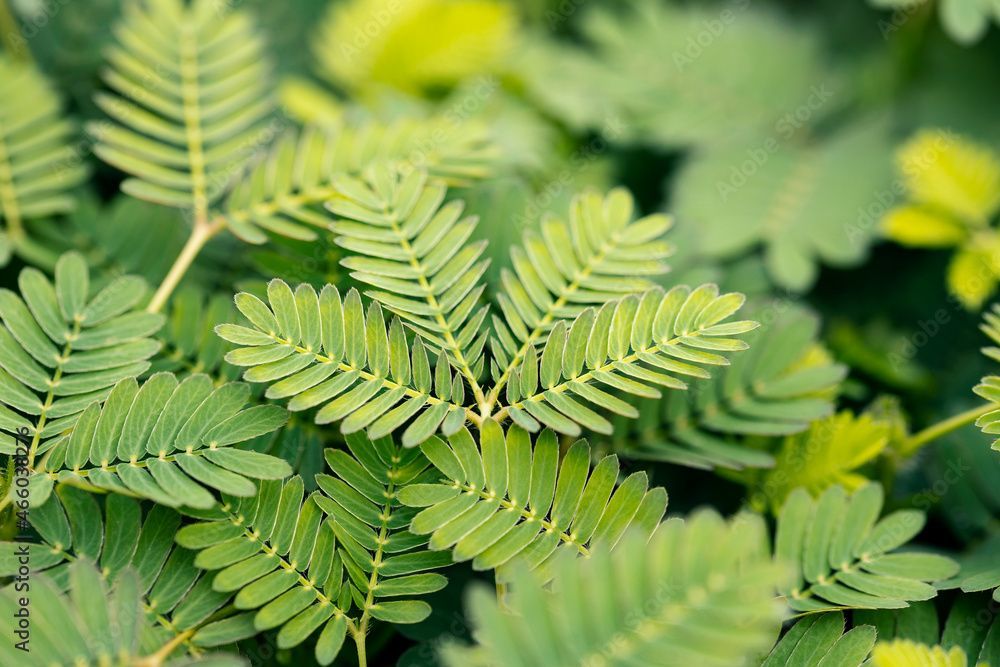
Fern-like compound leaves of a Mimosa tree (Albizia julibrissin)

🌿 Leaves

Mimosa trees have delicate, fern-like, twice-compound leaves that can reach 10–20 inches long. Each leaf is made up of dozens of tiny leaflets that fold together at night or during rain.

  • Fern-like appearance
  • Bright green leaflets
  • Leaves fold closed at night
  • Fine, feathery texture
Fern-like compound leaves of a Mimosa tree (Albizia julibrissin)

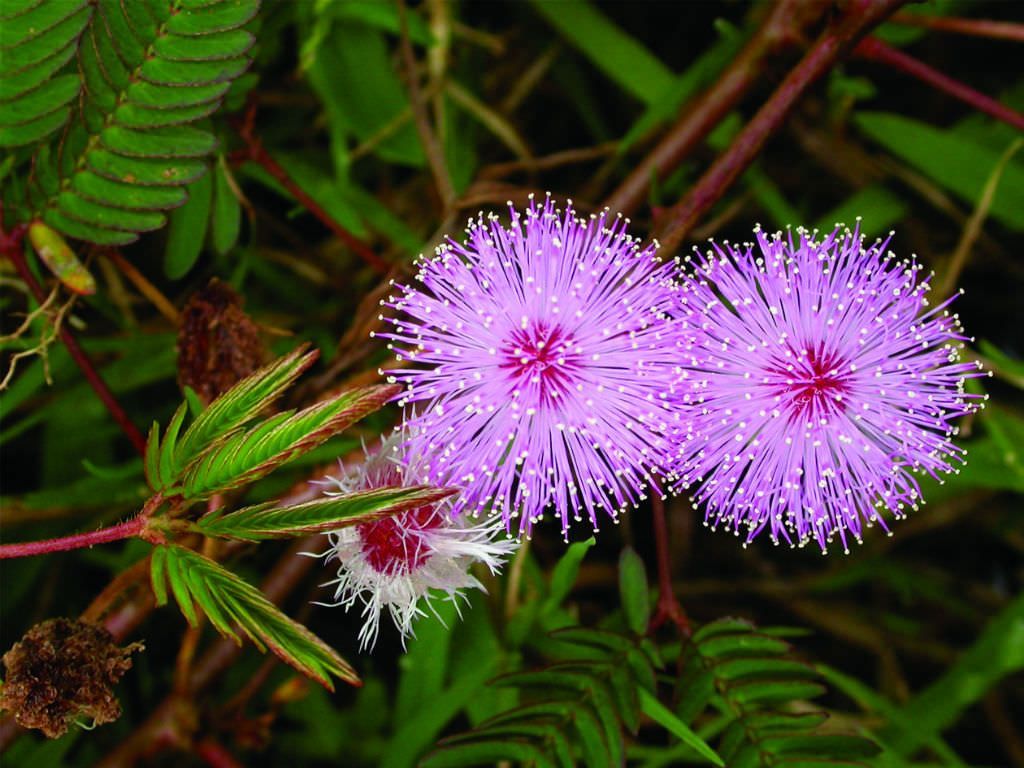
🌸 Flowers

One of the easiest ways to recognize a Mimosa tree is by its pink, silky powder-puff flowers that bloom throughout summer and attract bees, butterflies, and hummingbirds.

  • Pink powder-puff blooms
  • Fragrant
  • Blooms in summer
  • Highly attractive to pollinators
Fern-like compound leaves of a Mimosa tree (Albizia julibrissin)

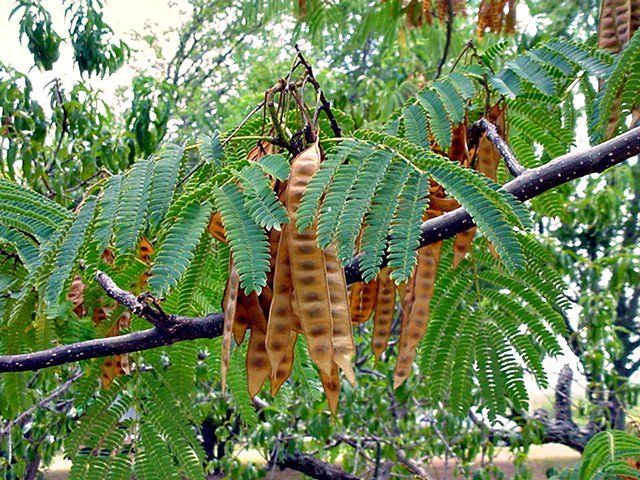
🌱 Seed Pods

After flowering, Mimosa trees produce flat brown seed pods that often remain on the tree through fall and winter, helping with identification outside the growing season.

  • Flat brown pods
  • Several inches long
  • Contain numerous seeds
  • Persist after leaves drop
Fern-like compound leaves of a Mimosa tree (Albizia julibrissin)

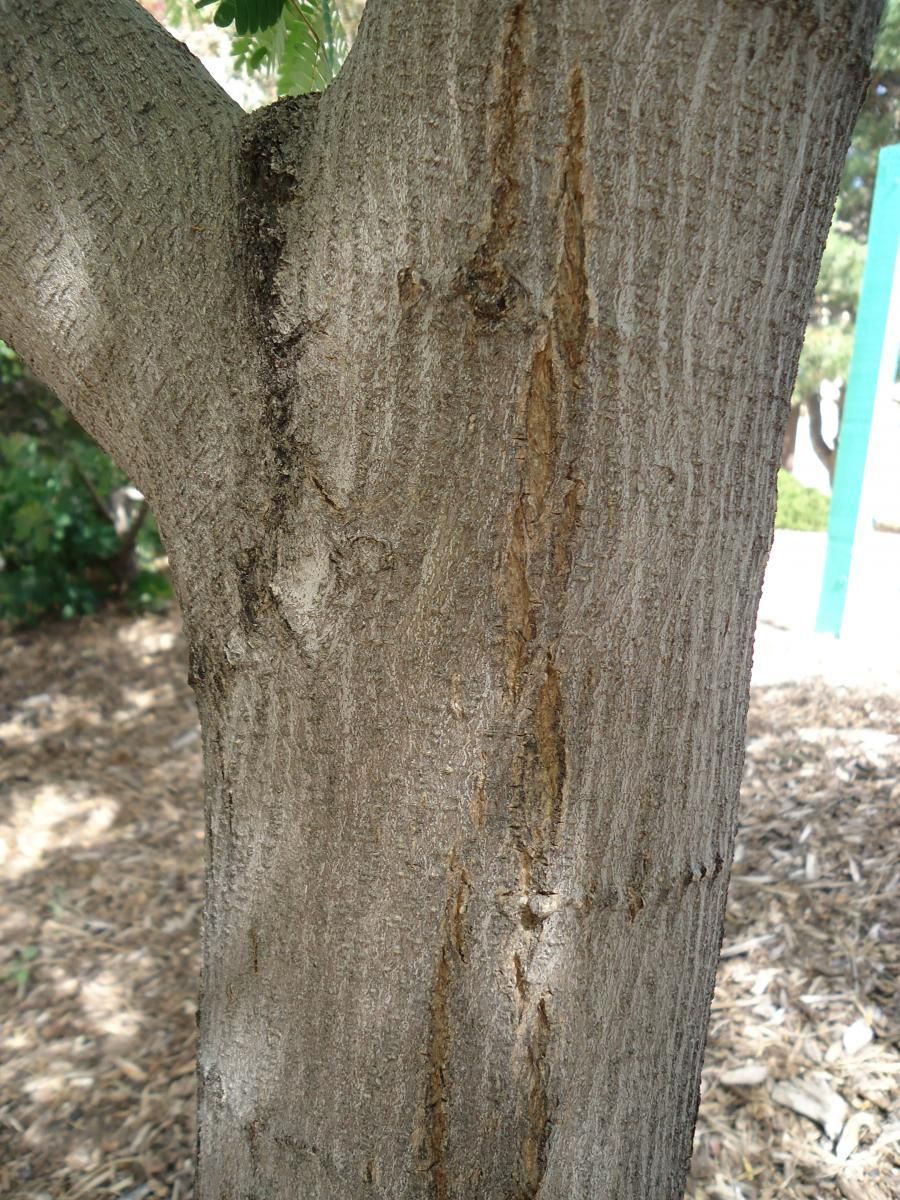
🌳 Bark

Young Mimosa trees have smooth gray bark that gradually develops shallow ridges and fissures as the tree matures, though it remains relatively smooth compared to many hardwoods.

  • Smooth gray bark
  • Light brown with age
  • Minor ridges on mature trees
  • Relatively thin bark
Fern-like compound leaves of a Mimosa tree (Albizia julibrissin)

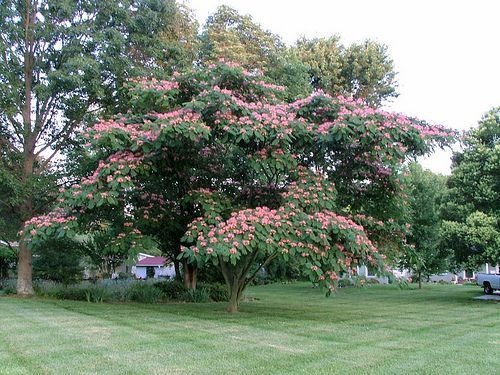
🌲 Growth Habit

Mimosa trees develop a broad, spreading canopy with an umbrella-like shape. They grow rapidly and typically remain between 20 and 40 feet tall, often with multiple trunks.

  • Wide umbrella canopy
  • Fast-growing
  • Often multi-stemmed
  • Open branching structure

IDENTIFICATION TIP

Mimosa Tree Look-Alikes

Mimosa trees are sometimes confused with other trees that have compound or fern-like leaves. The flowers and seed pods are usually the easiest way to confirm the identification.

  • Black Locust has compound leaves and hanging seed pods, but it does not produce pink powder-puff flowers. It usually has rougher bark and may have thorns.
  • Honey Locust has small leaflets and an open canopy, but its pods are much longer and darker than Mimosa seed pods. Some varieties also have large thorns.
  • Kentucky Coffeetree has large compound leaves and thick seed pods, but the leaves are much larger and the tree has a heavier, more upright structure.

Quick Tip: If the tree has pink, silky powder-puff flowers in summer followed by flat brown seed pods, it's very likely a Mimosa tree.

Mimosa Tree Removal & Management

The best removal approach depends on the tree’s size, location, and whether seedlings are already appearing nearby.

1

🌱 Remove Seedlings Early

Small Mimosa seedlings are easiest to control by hand. Pull them when the soil is moist, removing as much of the root system as possible before they become established.

2

🌿 Manage Young Trees

Young Mimosa trees can often be removed with hand tools or small equipment before they develop larger roots. Removing them early helps prevent future seed production.

3

🌳 Plan Mature Tree Removal

Large Mimosa trees require careful planning because of their broad canopy, brittle wood, and proximity to homes, fences, or utility lines. Professional removal is often the safest approach.

4

🪵 Monitor After Removal

After removing a Mimosa tree, watch the area for volunteer seedlings from previously dropped seeds. Prompt removal helps prevent the tree from becoming re-established.

🌲 Arborist Tip

Removing a mature Mimosa tree is often only part of the solution. Inspect the surrounding landscape for seedlings over the next growing season and remove them while they are still small.

Common Problems with Mimosa Trees

While Mimosa trees are admired for their fast growth and showy flowers, they also have characteristics that can create maintenance challenges. Understanding these issues can help homeowners decide whether the tree is a good long-term fit or if removal should be considered.


🌱 Fast Growth

Mimosa trees grow rapidly, allowing them to quickly outcompete nearby ornamentals and establish themselves in disturbed areas.


🌰 Self-Seeding

Hundreds of seeds can be produced each year. Seed pods often remain on the tree into winter, increasing the chance of new seedlings appearing nearby.


🌳 Brittle Wood

Despite their attractive appearance, Mimosa trees have relatively weak wood that is prone to splitting during heavy snow, wind, or ice storms.


🏡 Property Concerns

Their shallow root systems, messy flowers, seed pods, and frequent branch drop can create ongoing maintenance around patios, driveways, and landscapes.


⏳ Short Lifespan

Many Mimosa trees decline after only a few decades, making removal a common consideration as they mature.


🌎 Escaping Cultivation

While Mimosa trees are not among Washington's highest-priority invasive species, they can spread beyond landscaped areas and establish in disturbed habitats, particularly in warmer regions.

🌲 Arborist Insight

Mature Mimosa trees often become removal candidates because of structural decline rather than invasive spread. Their brittle wood and relatively short lifespan can make them more susceptible to storm damage as they age.

🌳 Need Help Removing a Mimosa Tree?

If your Mimosa tree has become overgrown, storm-damaged, or is growing too close to your home, Sound Tree Care provides safe, professional tree removal throughout the Puget Sound region. Our ISA Certified Arborists can assess the tree, explain your options, and recommend the best course of action.

[ Get a Free Estimate ]

Frequently Asked Questions About Mimosa Trees

Whether you're trying to identify a Mimosa tree, understand its growth habits, or decide if removal is the right option, these are some of the most common questions homeowners ask. The answers below provide additional guidance to help you make informed decisions about managing Mimosa trees in your landscape.

  • Is the Mimosa tree invasive in Washington?

    Mimosa trees are not considered one of Washington's highest-priority invasive tree species, but they are non-native and can escape cultivation in some areas. They spread primarily by seed and are more invasive in warmer climates, particularly across parts of the southeastern United States and Hawaii.

  • How can I identify a Mimosa tree?

    Look for fern-like, twice-compound leaves, pink powder-puff flowers that bloom during summer, and flat brown seed pods that often remain on the tree after flowering. Mature trees typically develop a broad, umbrella-shaped canopy with smooth gray bark.

  • How fast do Mimosa trees grow?

    Mimosa trees are considered fast-growing and may add several feet of new growth each year under favorable conditions. Their rapid growth is one reason they are commonly planted as ornamental shade trees.

  • Can I remove a Mimosa tree myself?

    Small seedlings and young trees can often be removed with hand tools. Mature trees are much heavier and more difficult to remove safely, especially if they are located near homes, fences, utility lines, or other landscape features. Professional removal is often the safest option for larger specimens.

  • Do Mimosa trees damage foundations or sidewalks?

    Mimosa trees are not typically known for causing the same level of root damage as species like Tree of Heaven or large maples. However, shallow roots can interfere with lawns, planting beds, and paved areas when trees are planted too close to structures.

  • When is the best time to remove a Mimosa tree?

    Mimosa trees can be removed any time of year, but removal before seed pods mature can help reduce the chance of unwanted seedlings. The best timing often depends on the tree's health, size, and location.

  • How long do Mimosa trees live?

    Compared with many shade trees, Mimosa trees have a relatively short lifespan. Many begin to decline after 20 to 30 years due to disease, structural weakness, or storm damage.

  • Why are Mimosa trees so popular?

    Homeowners often plant Mimosa trees because they grow quickly, provide light shade, and produce distinctive pink flowers that attract pollinators. Despite their ornamental appeal, their brittle wood, short lifespan, and tendency to self-seed can make them a poor long-term landscape choice.

Reviewed by ISA Certified Arborists

Every tree identification guide in our Washington Tree Identification Library is reviewed by the arborists at Sound Tree Care. Our recommendations are based on hands-on experience identifying, evaluating, pruning, and removing trees throughout the Puget Sound region.

ISA Certified Arborists
🌲 Local Washington Tree Expertise
📋 Tree Risk Assessments & Health Evaluations
🛠️ Science-Based Tree Care Recommendations

This guide is reviewed periodically to reflect current arboricultural best practices and Washington tree management recommendations.

Continue Exploring Washington Tree Identification

Mimosa trees are just one of many native, ornamental, and invasive tree species found throughout Washington. Visit our Tree Identification Guide to compare common trees, learn how to recognize key characteristics, and discover expert arborist insights for identifying and managing trees in your landscape.

Browse the Tree Identification Guide →