Tree Diameter Calculator

Convert tree circumference to diameter at standard height (DSH/DBH) in seconds — ideal for planning, inventories, and permit documentation.

Who This Tree Diameter Calculator Is For

  1. Homeowners estimating tree size, pruning scope, or removal costs
  2. Arborists & landscapers documenting diameter for reports
  3. HOAs & property managers tracking tree inventories
  4. Homeowners checking permit or protection thresholds


Calculate Tree Diameter

Single-Trunk Tree

Multi-Stemmed Tree

Benefits of Using Our Tree Diameter Calculator

  • Accuracy: Eliminate errors with our precise calculations.
  • Convenience: Accessible from any device, anywhere.
  • Time-Saving: Instantly convert circumference to diameter without manual math.

Our tool is trusted by arborists, forestry professionals, and homeowners across Seattle and beyond.

Content Authorship & Review

This page is written and reviewed by ISA Certified Arborists to support clear, accurate guidance for homeowners in the Puget Sound region.

Written By
AJ Flanagan, ISA Certified Arborist

AJ Flanagan

Assistant Operations Manager

ISA Certified Arborist (PN-374999A)

AJ supports on-site assessments and practical recommendations for tree pruning, removals, and safety decisions across the Puget Sound region. This page reflects field experience and current arboricultural standards.

Reviewed By
Eric Ledford, ISA Certified Arborist and TRAQ Qualified Tree Risk Assessor

Eric Ledford

Founder, Sound Tree Care LLC

ISA Certified Arborist (PN-9290A) • TRAQ • NUCA Dig Safe

Eric reviewed this page for accuracy and alignment with ISA best practices, ANSI A300 guidance, and common municipal permitting considerations in the Puget Sound region. This content is informational and not legal advice.

DBH Definition

Diameter at Breast Height (DBH)  is the standardized measurement of a tree’s trunk diameter taken 4.5 feet above ground, used by arborists, foresters, and municipalities to ensure consistent sizing.

DBH vs. DSH: Understanding Tree Diameter Measurements

Diameter at Breast Height (DBH) has long been the standard term used to describe the measurement of a tree’s trunk diameter taken 4.5 feet above ground level. This height was originally chosen to provide a consistent reference point above basal flare and root swelling.

In modern arboriculture and municipal tree codes, the term Diameter at Standard Height (DSH) is increasingly used instead. DSH refers to the same exact measurement point — 4.5 feet above finished grade — but replaces the subjective term “breast height” with a clearly defined, objective standard.

Because individuals’ “breast height” varies, many agencies, consultants, and municipalities now prefer DSH to eliminate ambiguity and ensure consistency across inspections, permits, and enforcement. While DBH and DSH are often used interchangeably, DSH is the more precise and contemporary term.

In practice: DBH = DSH = trunk diameter measured at 4.5 feet above ground.

For clarity, this page references both DBH and DSH, as DBH remains widely used in regulations, professional literature, and legacy tree ordinances.

Quick Tree Diameter Refence Table

๏ปฟTo use the reference table, measure the tree’s trunk circumference at 4.5 feet above ground and match that value to the closest entry. The corresponding diameter provides a quick, practical estimate of tree size without requiring calculations or specialized equipment.

Tree Circumference Tree Diameter (DSH)
31" 10"
47" 15"
63" 20"
78" 25"
94" 30"

Why Tree Diameter Matters

Determining tree diameter is essential for a variety of reasons:

  • Tree Health Assessments: Larger trees often indicate maturity and stability, but measurements also help detect growth problems.
  • Environmental Impact Studies: Accurately measuring diameter helps calculate the carbon sequestration potential of trees.
  • Lumber and Timber Value: Knowing a tree's diameter is key to estimating its wood volume and potential market value.

Whatever your needs, understanding tree diameter ensures you're making informed decisions.

Effortlessly Measure Your Tree's Diameter

Understanding the diameter of a tree is crucial for various purposes, from assessing its health to calculating its value for lumber or environmental studies. Our easy-to-use Tree Diameter Calculator simplifies the process, allowing you to determine accurate measurements in seconds. Perfect for arborists, landscapers, or homeowners, this tool eliminates guesswork and provides reliable results every time.

How to Measure Tree Diameter

Measuring the diameter of a tree is straightforward with our guide:

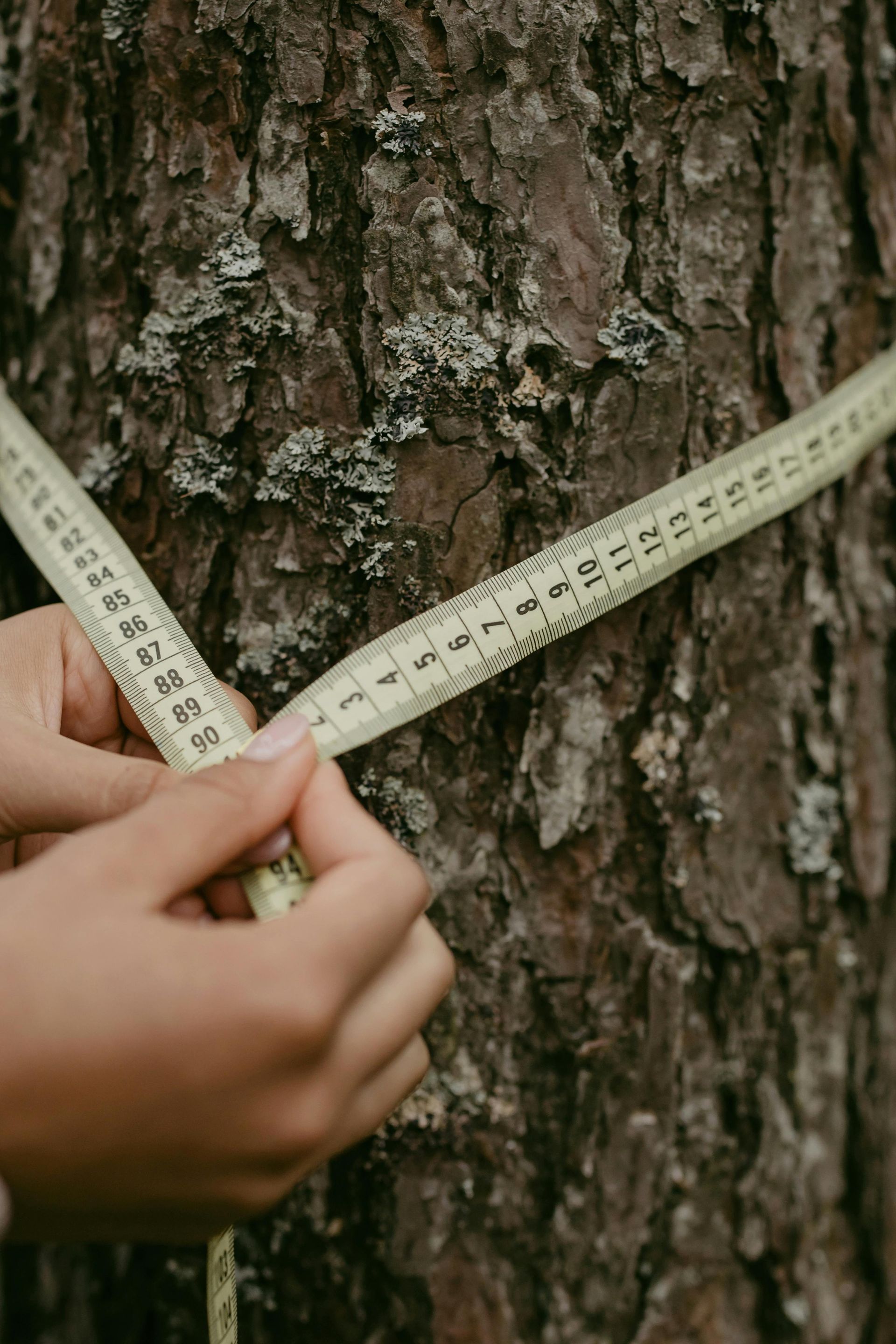
  1. Wrap a Measuring Tape Around the Tree's Trunk: Use a flexible measuring tape to measure the circumference of the tree at 4.5 feet above the ground (Diameter at Breast Height, or DBH).
  2. Input the Circumference into the Calculator: Enter your measurement into the calculator below.
  3. Get Instant Results: The calculator will display the tree's diameter, calculated by dividing the circumference by 3.1416 (Pi).

Use this simple formula or let our calculator do the math for you!

Flexible Tape Measures

Flexible tape measures are the preferred tools for accurately measuring tree circumference, particularly when determining diameter at standard height (DSH). Their flexibility allows the tape to wrap snugly and evenly around the trunk, producing a more reliable measurement than rigid tapes or estimations. To measure correctly, wrap the tape around the trunk 4.5 feet above ground, keeping it level and free of twists. Many forestry and arborist-specific tapes display the calculated diameter directly on the reverse side, making them especially useful for quick field measurements and reporting.

perfect pi tape measure

For an affordable yet reliable option, consider this inexpensive, compact, and lightweight tape measure. Its portability makes it ideal for on-the-go tasks, without compromising on accuracy.  Magnetic core adds unique storage options. This tape is 12' long and suitable for trees with diameter to almost 4'.

English Steel Tape measure

If you prefer a tape measure with advanced features, check out our fully-featured flexible tape measure with a nail hook included and high-visibility paint. This tape measure is perfect for professionals who demand precision and durability in their equipment. This tape is 20' long and suitable for trees with diameter to over 6'.

Spencer 950D

For those seeking a robust design trusted by arborists and forestry experts, explore our favorite tape measure. Its sturdy construction ensures longevity, making it a dependable companion for arborists tackling challenging environments. This tape is 50' long and suitable for trees with diameter to almost 16'.

๐Ÿ’ฌ Frequently Asked Questions About Tree Diameter Measurement

Whether you're dealing with hazardous limbs, storm-damaged trees, or seasonal pruning, our ISA Certified Arborists are here to help. These FAQs cover the most common questions homeowners ask us across Seattle, Bellevue, Tacoma, and the greater Puget Sound region.

If you don’t see your question here, just reach out — we’re happy to assist.

  • What is tree diameter measured at standard height (DSH)?

    Tree diameter at standard height (DSH) is the measurement of a tree’s trunk diameter taken 4.5 feet above ground level. This standardized height avoids irregularities such as trunk flare and root swelling near the base, providing consistent and comparable measurements.

  • Is DSH the same as DBH?

    Yes. DSH (Diameter at Standard Height) and DBH (Diameter at Breast Height) refer to the same measurement point — 4.5 feet above ground. DSH is increasingly used in modern arboriculture and municipal codes because it defines a fixed, objective measurement height, while DBH remains common in legacy regulations and professional literature.

  • Why is tree diameter not measured at the base of the tree?

    Tree trunks often flare outward near the base due to root structure and buttressing. Measuring diameter at the base can significantly overestimate tree size. Measuring at 4.5 feet above ground provides a more accurate and standardized reference point.

  • How do I calculate tree diameter from circumference?

    If you measure circumference using a flexible tape, divide the circumference by π (3.1416) to calculate diameter. Many arborist and forestry tapes display the diameter directly, eliminating the need for manual calculations.

  • How are multi-stem trees measured for diameter?

    Multi-stem trees are typically measured by recording the diameter of each individual stem at 4.5 feet above ground. How those measurements are combined depends on local municipal codes and permit requirements, which may vary by jurisdiction.

  • Is tree diameter used for permits and tree protection regulations?

    Yes. Tree diameter is commonly used by cities and municipalities to determine permit requirements, protection thresholds, mitigation obligations, and replacement ratios. Accurate measurement is essential when planning construction, pruning, or tree removal.

  • Does tree diameter indicate tree health or risk?

    No. Tree diameter alone does not determine a tree’s health or structural risk. A comprehensive arborist assessment considers species, defects, decay, canopy condition, site factors, and exposure, in addition to diameter.

When precise measurements or regulatory decisions are involved, consulting a certified arborist helps ensure tree diameter data is interpreted correctly and applied appropriately.

๐ŸŒฒNeed a Professional Tree Assessment?


Measuring tree diameter is an important first step — but DBH alone doesn’t tell the full story. Tree health, structural integrity, species, site conditions, and local regulations all play a role in safe and compliant tree care decisions.


If you’re planning tree removal, pruning, construction, or navigating permit requirements, a certified arborist can provide clarity and confidence.


๐ŸŒŸ ISA Certified Arborists | TRAQ-Qualified
๐ŸŒŸ 5-Star Reviews on Google, Yelp & Facebook
๐ŸŒŸ Licensed, Insured & City-Compliant
๐ŸŒŸ Trusted by Homeowners Throughout Sammamish


๐Ÿ“ž Call us now at 206-486-7790–Schedule an Arborist Consultation
๐Ÿ“ Request an Online Quote:
Client Hub

๐Ÿ“ Serving all of Pine Lake, Klahanie, Beaver Lake, Sahalee, and all Sammamish neighborhoods.