Tree identification · Western Washington
Red Alder Identification Guide for Western Washington
Red alder ( Alnus rubra ) is a native deciduous tree with coarsely toothed leaves that roll under at the edges, smooth gray bark, and small woody seed cones.
Start with the leaf edge when foliage is available. In winter, look for woody seed cones and stalked buds on the same tree.
Red Alder Quick Facts
- Scientific name
- Alnus rubra
- Also called
- Oregon alder
- Tree type
- Native deciduous broadleaf
- Leaves
- Alternate, coarsely toothed, edges rolled under
- Flowers
- Long male and short female catkins
- Fruit
- Small woody seed cones
How to Identify Red Alder
- Follow the leaves along a twig. Single leaves alternate and usually have an oval to diamond-shaped outline with prominent side veins.
- Look across the leaf edge. The coarse teeth sit along a margin that rolls toward the underside.
- Look for catkins or old seed cones. Long pollen catkins hang in late winter or spring. Small woody seed cones can remain after leaves drop.
- Check the bark and buds. Look for light gray bark, often mottled by lichens, and buds on short stalks.
Start with the leaf edge. Gray bark and woody seed cones occur on other alders too.
Red Alder Visual Identification Guide
Compare leaves, bark and reproductive features across the seasons. Reference photographs include trees in Western Washington and Oregon.

Leaves with prominent veins
Look for simple, alternate leaves with prominent side veins and a coarsely toothed edge.

Check the rolled leaf edge
Turn a leaf sideways and look for the toothed margin curling toward the underside. Compare several mature leaves.

Spring catkins
Long pollen catkins hang from the twigs. Short female catkins develop on the same tree.

Woody seed cones
Female catkins mature into small woody structures that can remain on branches after leaf fall.
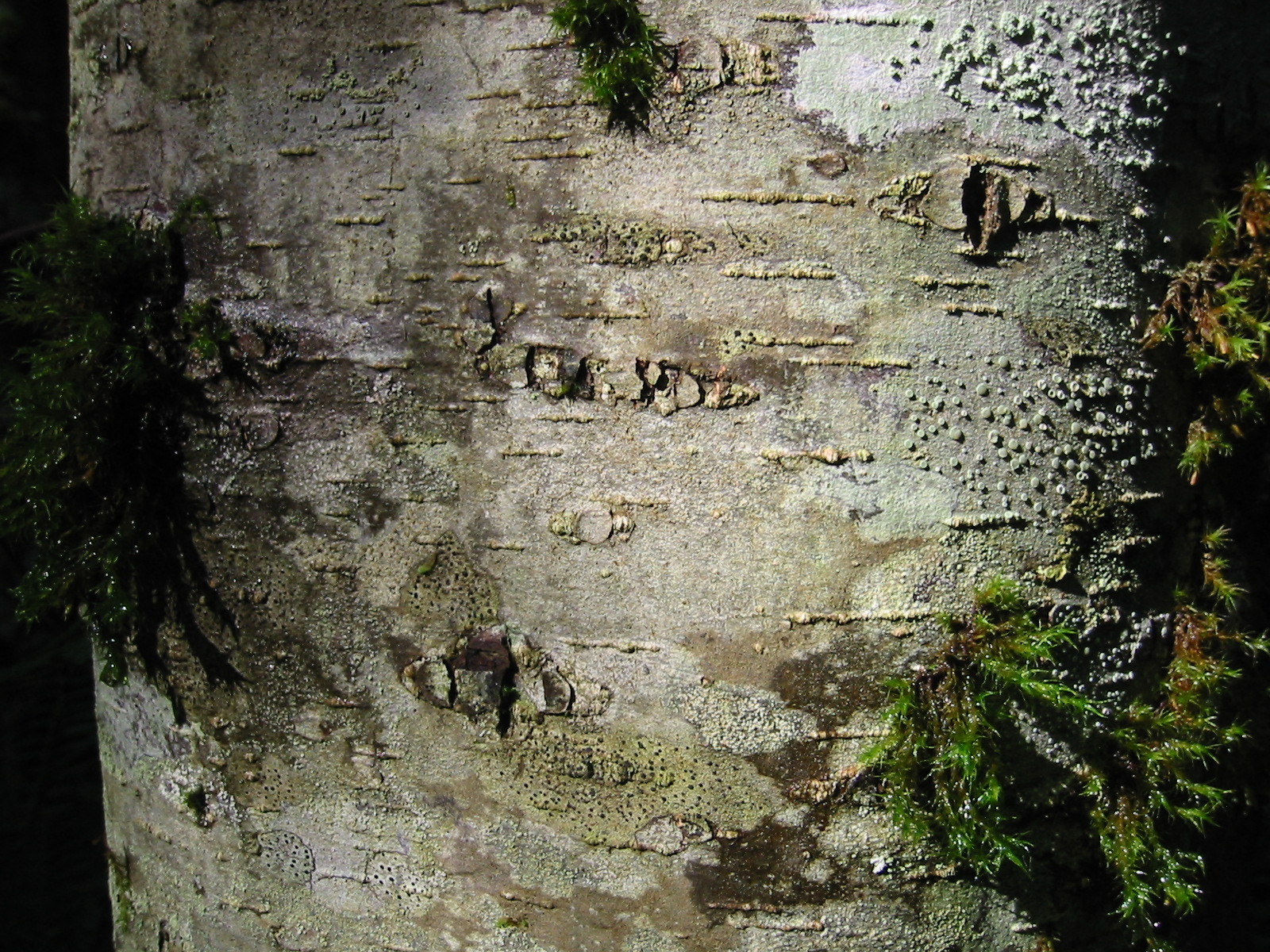
Smooth gray bark
The bark is usually smooth and light gray. Pale lichen often gives the trunk a mottled, nearly white appearance.

Reddish bark on an old break
The inner bark can show orange-red color at wounds. Use existing breaks as a secondary clue and leave intact bark in place.
Red Alder vs. White Alder
Both trees can have pale gray bark, catkins and woody seed cones. Compare the margins of several mature leaves.
| Feature | Red alder | White alder |
|---|---|---|
| Scientific name | Alnus rubra | Alnus rhombifolia |
| Leaf teeth | Coarsely toothed | Finely toothed or doubly toothed |
| Leaf margin | Rolls under toward the underside | Typically flat at the edge |
| Leaf underside | Often grayish, with hairs along veins | Paler green than the upper surface |
| Winter clues | Woody seed cones and stalked buds | Similar cones and buds. Check leaves in season for a firmer ID. |
Photograph the edge from the side. A photo taken straight down can hide the curl.
Other Red Alder Look-Alikes
- Sitka alder ( Alnus alnobetula subsp. sinuata ) usually grows as a shrub or small tree. Its finely toothed leaf edges lack the characteristic red alder roll.
- Birches ( Betula spp.) can have pale bark, toothed leaves and hanging catkins. Look for alder’s hard, persistent seed cones and compare the leaf margin.
Red Alder in Western Washington
Red alder is native to the Pacific Northwest. It establishes readily on open, disturbed ground and along streams. Bacteria in root nodules fix nitrogen, which can enrich the soil as leaves and other plant material decompose.
On a residential site, consider the condition of the individual tree and what it could strike. Note dead limbs, cracks, changes in lean, exposed roots or recent excavation. Check city or county requirements before removal, especially near streams, wetlands or steep slopes.
For identification, photograph the whole tree, a leafy twig and any cones. For a condition assessment, include photos showing the trunk base and nearby structures.
Red Alder Identification FAQs
What is the fastest way to identify red alder?
Check several mature leaves for coarse teeth and edges that roll under. Look for small woody seed cones or pale gray bark on the same tree.
Why is it called red alder if the bark is gray?
The outer bark is usually light gray. The inner bark is orange-red and existing wounds can show reddish color.
How do I tell red alder from white alder?
Red alder has coarsely toothed margins that roll under. White alder generally has finer teeth and a flatter leaf margin.
Can I identify red alder in winter?
Look for persistent woody seed cones, stalked buds and smooth gray bark. Those clues can point to alder. Check the leaf edges when foliage returns if you need to separate red alder from white alder.
Is red alder native to Western Washington?
Yes. It is a native deciduous tree that commonly colonizes open, disturbed ground, including stream corridors, roadsides and forest openings.
Does a red alder near my house need to come down?
An arborist can assess the individual tree and what it could strike. Photograph any recent lean, cracks, dead limbs or changes around the roots and check local rules before scheduling work.
Need Help with a Red Alder?
Send Sound Tree Care photos of the whole tree, its leaves or seed cones, and the area around the trunk. Tell us whether you need identification, pruning, removal planning or a tree risk assessment.
Explore tree risk assessments, tree removal, and permit resources. Formal assessments and reports are separately scoped services.
References and Photo Credits
Photographer credits and licenses appear beside each image. Explore our Douglas-fir guide and western redcedar guide.