Tree identification · Western Washington
Japanese Maple Identification: Leaves, Bark & Common Types
Japanese maples can have green or burgundy leaves, upright branches or cascading crowns, and broad lobes or fine laceleaf foliage. Start with leaf arrangement and shape, then compare the seeds, bark, and whole tree.
This expanded visual guide focuses on Acer palmatum , a familiar ornamental maple in Puget Sound gardens. It also explains the differences between common forms and similar maple species, without guessing a cultivar from its color alone.
Japanese Maple Quick Facts
- Main species covered
- Acer palmatum
- Tree type
- Deciduous ornamental maple
- Leaf arrangement
- Opposite pairs along the twig
- Leaf shape
- Hand-shaped; usually 5–9 pointed lobes
- Fruit
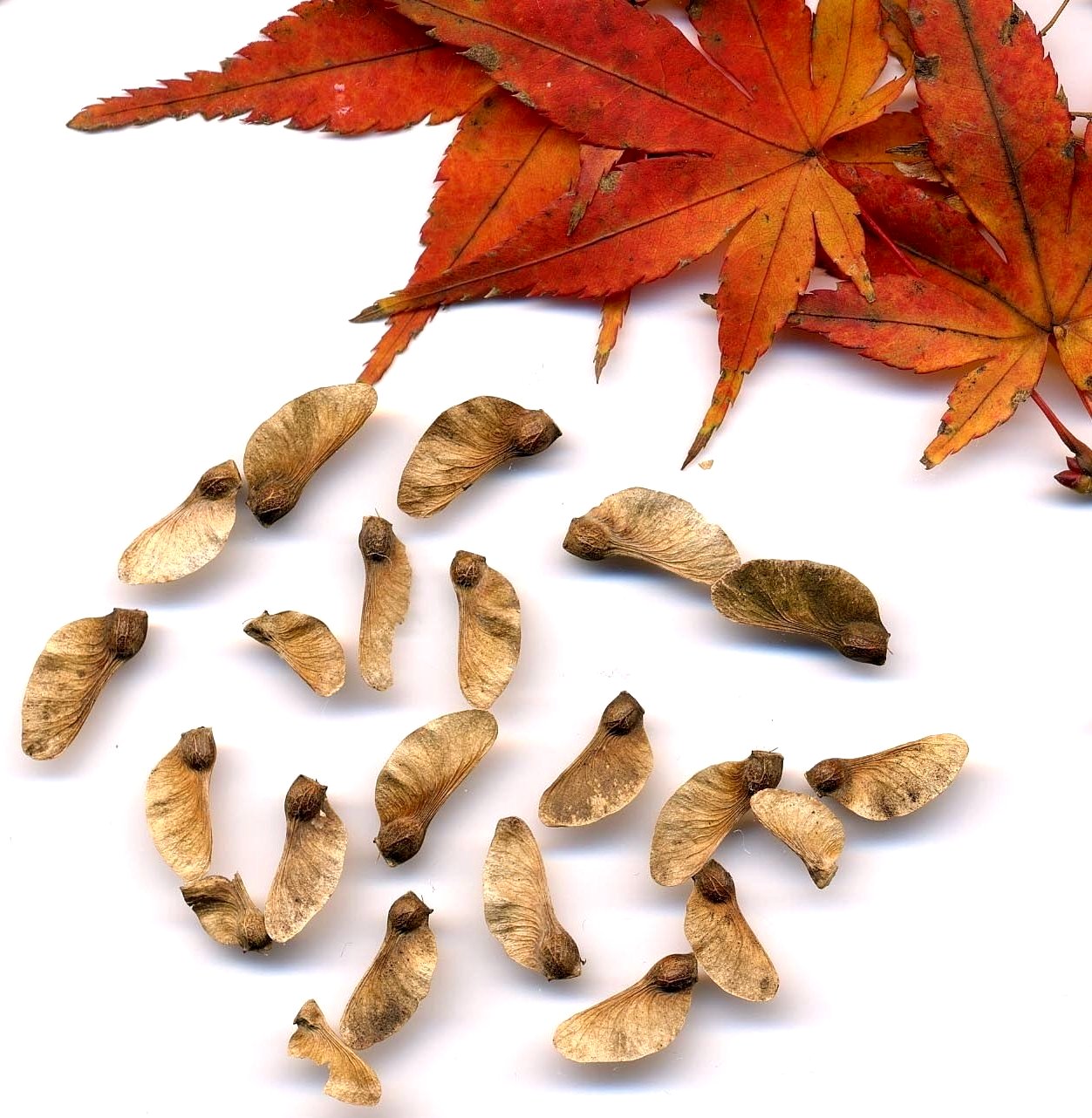
- Paired winged samaras
- Typical forms
- Upright, spreading, or weeping
Japanese maple is not native to Washington. The garden name can also be used broadly for related ornamental maples, including Acer japonicum and Acer shirasawanum. A nursery label with the botanical name is valuable.
How to Identify a Japanese Maple
- Look at a twig with several leaves attached. Leaves occur in opposite pairs. A detached leaf cannot show that arrangement.
- Follow the veins and lobes. Major veins spread from the leaf base like fingers from a palm. The lobes usually have pointed ends and toothed margins.
- Check the depth of the cuts. Some leaves have broad lobes; laceleaf forms are divided into narrow, feathery segments.
- Find the winged fruit. Maples produce paired samaras, often called helicopters. Their presence supports maple identification but does not establish the species by itself.
- Compare the whole tree and bark. Growth habit and slender branches complete the picture. Size, pruning, and seasonal color can all change its appearance.
Red leaves are not required. Many Japanese maples are green through much of the growing season. A red leaf also does not automatically mean the tree is the species called red maple, Acer rubrum.
Japanese Maple Visual Identification Guide
Compare leaf structure before color. The botanical reference photographs below show individual features; the Sound Tree Care photograph shows an established tree in a local landscape.




Common Japanese Maple Types & Forms
Homeowners often describe a tree by its shape or foliage rather than a formal cultivar name. These descriptions are useful, but they overlap: a Japanese maple can be both red-leaved and laceleaf, for example.
Species identification and cultivar identification are different tasks. A photo may support Acer palmatum or a laceleaf form without establishing a name such as ‘Bloodgood’ or ‘Sango-kaku’. Keep planting records, nursery labels, and photographs from several seasons.
Japanese Maple vs. Other Maples
| Tree | Useful leaf clues | What to compare |
|---|---|---|
| Japanese maple Acer palmatum |
Usually 5–9 pointed lobes, often deeply separated; many cultivated forms | Opposite leaves, fruit, branch structure, and planting history |
| Vine maple Acer circinatum |
Usually a rounder outline with 7–9 lobes, though counts vary | A native woodland maple that can also be planted in gardens; compare complete leaves and fruit |
| Red maple Acer rubrum |
Usually 3 lobes, sometimes 5; paler undersides | Often a much larger landscape tree; the species name does not mean burgundy foliage all summer |
| Fullmoon maple Acer japonicum |
Broad, rounded leaves with multiple lobes; some selections deeply divided | Leaf shape can overlap with other ornamental maples; use the botanical label and additional features |
Lobe counts overlap between species and vary within a tree. Use the entire leaf outline, twig, fruit, and growing context together rather than treating one number as a definitive test.
Caring for a Japanese Maple in Western Washington
Identify the tree and its natural form before planning pruning. An upright maple and a cascading laceleaf specimen need different clearance decisions; neither should be forced into an arbitrary shape.
- Keep the root zone protected. Avoid damaging roots or thin bark with digging, string trimmers, and lawn equipment.
- Pay attention to moisture and drainage. Many Japanese maples favor evenly moist, well-drained soil and shelter from drying winds. Check conditions before adding water.
- Use mulch thoughtfully. An organic mulch layer helps conserve soil moisture; keep it clear of the trunk.
- Prune with a specific purpose. Address dead or damaged wood and necessary clearance while preserving the branch framework. Routine heavy shearing can hide that structure.
Brown leaf edges can be associated with sun, wind, or moisture stress. Browning alone does not identify the cause or prove that a tree has a disease. Note when the change began and whether it affects one branch or the whole canopy.
Explore our tree pruning services or plant health care for help with an established specimen.
Japanese Maple Identification FAQs
Are all Japanese maples red?
No. Many have green foliage. Red, purple, yellow, and variegated selections also exist, and a tree's colors can change through the growing season.
Is a laceleaf maple a Japanese maple?
“Laceleaf Japanese maple” commonly describes deeply dissected forms of Acer palmatum. It describes leaf structure, not one unique cultivar.
What are Japanese maple seed pods called?
The winged fruits are samaras, usually joined in pairs before separating. They are often called helicopters or seed pods, but they are not bean-like pods.
Can you tell which Japanese maple variety I have from a picture?
Photos can help identify a species or general form. Exact cultivar identification may require nursery records and details from several seasons because many selections look similar.
Do Japanese maples lose their leaves?
Yes. They are deciduous. Photographing the winter branch structure as well as summer foliage can help document the tree and plan appropriate care.
Is a Japanese maple the same as a vine maple?
No. Acer palmatum and the native vine maple, Acer circinatum , are different species. They share opposite, lobed leaves, so compare more than fall color.
Need Help With Your Japanese Maple?
Sound Tree Care LLC helps homeowners in Seattle, Burien, Renton, and surrounding Western Washington communities understand and care for their trees. Share photos of the whole tree, a leafy twig, and the area that concerns you.