What To Do If Your Insurance Company Demands Tree Trimming or Removal
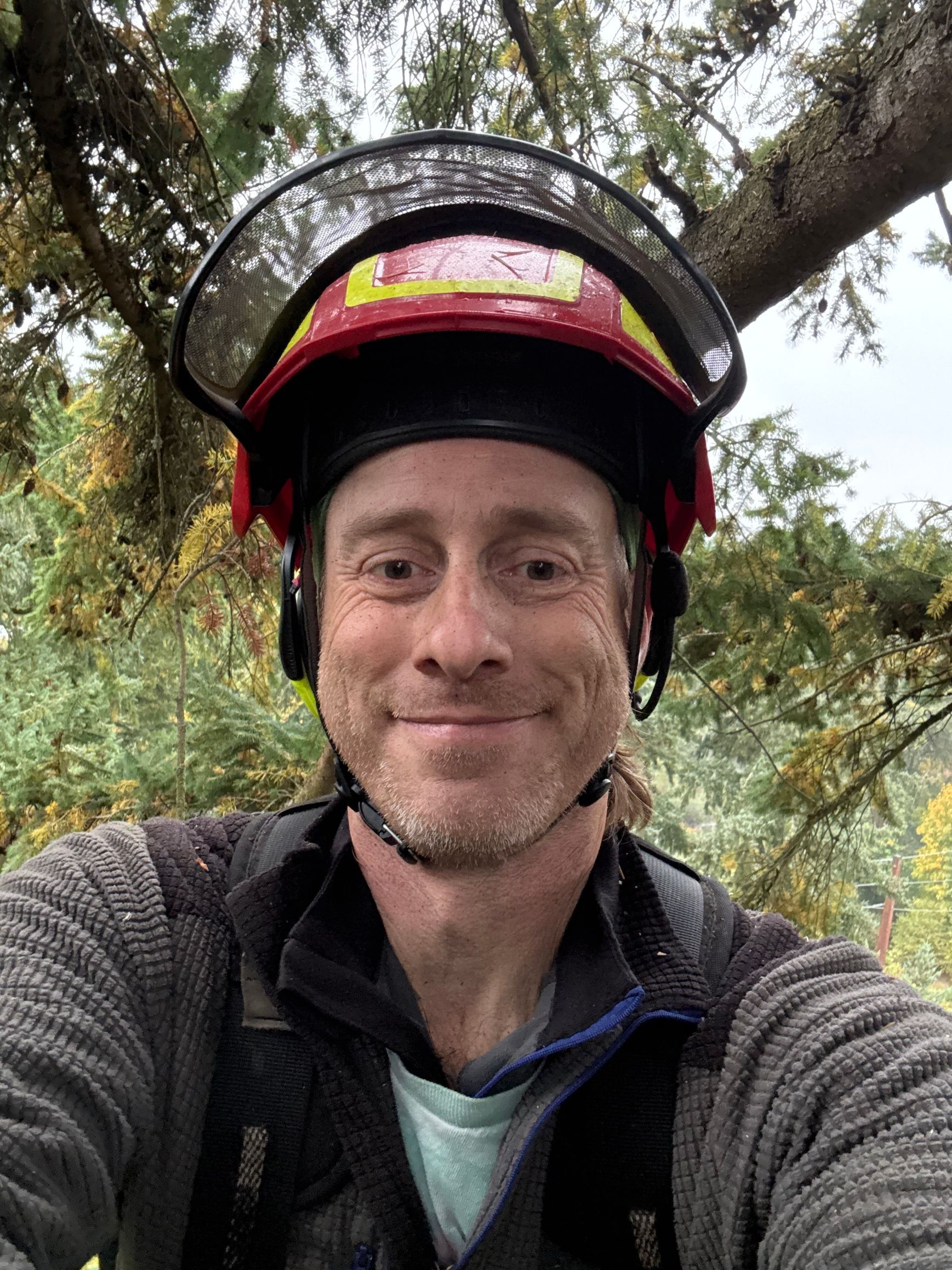
Written By: Eric Ledford
ISA Certified Arborist – PN-9290A
ISA Qualified Tree Risk Assessor (TRAQ)
Insurance Tree Notices Can Miss Serious Hazards
Insurance companies often evaluate trees using aerial imagery, drone inspections, or generalized property risk screening. However, these inspections may overlook utility conflicts, municipal tree protection codes, environmental critical areas, and hidden structural hazards that require professional arboricultural assessment.
Common Issues Missed by Remote Tree Inspections
Homeowners across Washington State and the Seattle area are increasingly receiving letters from insurance companies demanding tree trimming, hazard mitigation, or tree removal. These notices are often triggered by aerial imagery, drone inspections, satellite analysis, storm risk modeling, or third-party property inspections.
In some cases, the concerns are legitimate. Overextended limbs, storm-damaged trees, deadwood, trees over roofs, and trees contacting utility infrastructure can create real property risks. However, remote insurance inspections can also miss critical site-specific hazards that may only be identified during an in-person assessment by a qualified arborist.
At Sound Tree Care, we have encountered situations where homeowners were encouraged to trim trees near energized conductors or hidden electrical service lines without understanding the serious safety hazards involved. In one case, an insurance-related tree trimming concern involved a tree with electrical contact risk that could have seriously injured or killed an untrained homeowner attempting DIY pruning.
Common Tree Concerns That Trigger Insurance Letters
Insurance companies often flag visible tree conditions that may increase the risk of property damage, storm claims, or liability concerns.
Branches Over Roofs
Limbs touching or overhanging rooflines, gutters, chimneys, or siding.
Dead or Declining Trees
Trees with dead tops, canopy dieback, decay, or obvious structural decline.
Utility Line Conflicts
Trees growing near service drops, power lines, or concealed electrical conductors.
Storm Exposure
Large limbs, heavy canopies, or trees exposed to wind and winter weather.
Leaning Trees
Trees leaning toward homes, driveways, neighboring structures, or access routes.
Large Defective Limbs
Overextended, cracked, dead, or poorly attached limbs above targets.
Why Insurance Companies Send Tree Hazard Letters
Insurance companies attempt to reduce storm damage claims, roof impacts, wildfire exposure, and liability risks by identifying trees that may threaten structures or infrastructure. Common concerns include:
Some homeowners receive notices threatening policy nonrenewal or cancellation if corrective action is not taken within a specified timeframe.
The Limits of Drone and Aerial Tree Inspections
Many insurance inspections now rely heavily on:
While these tools can identify obvious canopy conflicts, they often cannot accurately assess:
A tree may appear relatively harmless from aerial imagery while containing severe structural or electrical hazards only visible from ground level.
This is one reason why onsite ISA Certified Arborist assessments remain important when evaluating tree risk and determining appropriate mitigation options.
Insurance Risk Screening vs ISA Certified Arborist Assessment
Insurance Risk Screening
Insurance inspections are generally designed to identify broad property risks using aerial imagery, third-party inspections, and generalized hazard criteria.
ISA Certified Arborist Assessment
ISA Certified Arborists are trained to evaluate tree biology, structural integrity, species-specific failure patterns, utility conflicts, and site-specific risk factors.
Insurance Inspections Are Not Tree Code Reviews
Insurance companies evaluate trees primarily from a property risk and liability perspective. However, insurance inspections typically do not evaluate municipal tree protection regulations, environmentally critical area restrictions, permit requirements, or long-term tree preservation considerations.
ISA Certified Arborist Perspective
Arborists evaluate tree structure, species risk, utility conflicts, preservation feasibility, municipal compliance, and mitigation strategies.
Municipal Tree Protection Codes
Many Seattle-area cities regulate major pruning and removal involving protected, exceptional, street, and significant trees.
Environmentally Critical Areas
Trees in steep slopes, wetlands, shoreline buffers, or ECAs may require permits or environmental review before work begins.
Permits and Compliance
Insurance letters may request aggressive pruning or removal without considering permits, arborist reports, or local code restrictions.
Important:
Insurance concerns should still be taken seriously. However, insurance risk screening is not a substitute for professional arboricultural assessment, municipal code review, or environmental permitting analysis.
“Placeholder quote from collaborating ISA Certified Arborist regarding insurance inspections, utility hazards, municipal code considerations, or arboricultural assessment.”
Trees Near Power Lines Can Be Extremely Dangerous
One of the most serious hazards we encounter involves trees growing near energized electrical conductors.
Homeowners sometimes receive insurance notices requesting trimming of branches near homes or roofs without realizing that electrical service lines may pass directly through the canopy. In some situations, trees can become energized through conductor contact, damaged insulation, or utility conflicts.
Tree pruning near electrical infrastructure should never be treated as routine DIY yard work.
Potential hazards include:
If a tree is contacting or growing near utility lines, homeowners should contact qualified professionals and coordinate with the utility provider when necessary.
⚠ Hidden Electrical Hazards
Trees contacting or growing near energized conductors can become extremely dangerous. Secondary service drops and utility lines are often concealed within dense canopies and may not be visible from aerial imagery alone.
Why DIY Tree Trimming Can Become Dangerous
Insurance letters sometimes create pressure for homeowners to “handle the problem quickly.” Unfortunately, many property owners underestimate the complexity and dangers involved with tree work.
Even relatively small pruning jobs can involve:
Improper pruning can also worsen tree conditions by creating decay entry points, destabilizing branch structure, or increasing future failure potential.
In many cases, selective pruning, weight reduction, canopy cleaning, cabling, or professional risk mitigation may provide safer and more appropriate solutions than aggressive topping or indiscriminate limb removal.
When You Need an ISA Certified Arborist
A professional arborist assessment may be appropriate when:
When You Should Contact an ISA Certified Arborist
Professional arborist assessments are especially valuable when insurance concerns involve structural hazards, utility conflicts, protected trees, municipal code requirements, or uncertainty about the safest mitigation strategy.
An ISA Certified Arborist Can Help Evaluate:
What To Do After Receiving an Insurance Tree Letter
Insurance tree notices can feel overwhelming, especially when utility lines, large trees, storm damage, or potential policy cancellation are involved. Before attempting DIY pruning or scheduling unnecessary removals, homeowners should understand the actual condition and risks associated with the tree.
Identify what the insurance company is actually requesting and whether timelines or documentation requirements are included.
Trees near utility lines, structures, or hidden conductors can present serious safety hazards.
A professional ISA Certified Arborist can evaluate the actual structural condition, utility conflicts, and mitigation options.
Depending on the tree, appropriate solutions may include pruning, cabling, monitoring, preservation planning, or removal.
Need a Professional Tree Risk Assessment?
Sound Tree Care provides ISA Certified Arborist assessments, tree risk evaluations, utility-aware pruning recommendations, and arborist reports throughout the Seattle area. Our team helps homeowners understand insurance-related tree concerns and determine safe, practical, and code-compliant solutions.
Learn More About Our Certified Arborist Services →Tree Removal vs Tree Preservation Options
Not every tree identified in an insurance notice requires removal.
Depending on the condition of the tree, appropriate mitigation may include:
In other situations, removal may ultimately be the safest and most reasonable option due to:
- severe decay
- structural instability
- root failure risk
- electrical conflicts
- construction impacts
- repeated storm failures
- unacceptable target exposure
A professional assessment can help homeowners make informed decisions instead of reacting solely to generalized aerial inspection notices.
Related Arborist and Tree Risk Services
Insurance-related tree concerns often involve hazard assessments, arborist documentation, preservation planning, and professional mitigation recommendations. Explore related services below.
Certified Arborist Services
Professional ISA Certified Arborist evaluations, consulting, tree preservation planning, and site-specific recommendations throughout the Seattle area.
Arborist Reports
Detailed arborist documentation for insurance concerns, tree hazards, permitting, construction impacts, and municipal compliance.
Tree Risk Assessments
Professional tree hazard evaluations involving structural defects, storm exposure, target analysis, utility conflicts, and mitigation recommendations.
Tree Removal Services
Safe and professional tree removal services for hazardous, declining, storm-damaged, or structurally compromised trees.
Frequently Asked Questions About Insurance Tree Notices
Can insurance companies require tree removal?
Insurance companies may require homeowners to mitigate perceived property risks as a condition of coverage. In some situations, insurers may request pruning, hazard mitigation, or tree removal if a tree is considered likely to damage structures or create liability concerns.
However, remote insurance inspections do not always identify the full structural condition, biological health, or utility conflicts associated with a tree. An ISA Certified Arborist assessment can help determine whether pruning, preservation, monitoring, or removal is the most appropriate solution.
What happens if I ignore an insurance tree notice?
Ignoring an insurance tree notice may result in policy nonrenewal, cancellation, reduced coverage, or denial of future claims related to the identified hazard.
Homeowners should carefully review the notice, understand the requested corrective actions, and consider obtaining a professional arborist evaluation before proceeding with major pruning or tree removal work.
Is it dangerous to trim trees near power lines?
Yes. Trees growing near energized electrical conductors can present serious electrocution and fire hazards. Utility service drops and power lines are often concealed within dense canopies and may not be visible from the ground or from aerial imagery alone.
Homeowners should never attempt DIY pruning near energized conductors. Tree work involving utility infrastructure should only be performed by qualified professionals with appropriate training and utility coordination when necessary.
Can drone or aerial imaging miss tree hazards?
Yes. Drone imagery, satellite photography, and aerial inspections can identify broad canopy conflicts and roof proximity concerns, but they may not accurately detect internal decay, structural defects, hidden utility lines, root instability, or species-specific failure risks.
Aerial inspections are generally designed for broad risk screening rather than detailed arboricultural analysis. Onsite ISA Certified Arborist assessments provide significantly more detailed evaluations of tree condition and site-specific hazards.
Do I need an arborist report for insurance?
In many cases, an arborist report can help homeowners better understand the actual condition of a tree and provide documentation regarding structural defects, mitigation options, preservation feasibility, or removal recommendations.
Arborist reports may also assist with permitting, municipal compliance, utility conflicts, and communication with insurance providers regarding site-specific conditions.
Can a tree become energized?
Yes. Trees contacting damaged or energized electrical conductors can potentially become electrically energized. In some situations, branches, trunks, or surrounding vegetation may conduct electricity and create severe shock hazards.
Any suspected electrical conflict involving a tree should be treated as extremely dangerous and evaluated by qualified professionals and utility providers.
Are homeowners responsible for trees near utility lines?
Responsibility varies depending on the type of utility line, property ownership, utility easements, and local regulations. Homeowners are often responsible for vegetation around private service drops and trees located on their property, while utility companies may maintain clearance around primary distribution lines.
An arborist assessment can help identify utility conflicts and determine appropriate next steps before pruning or removal work begins.
Can tree trimming damage a tree?
Yes. Improper pruning practices can create decay entry points, destabilize branch structure, increase future failure risk, and permanently reduce tree health and appearance.
Professional pruning performed according to ANSI A300 standards helps reduce unnecessary damage while improving long-term structure, safety, and canopy management.
Professional Tree Risk Assessments in the Seattle Area
Sound Tree Care provides professional arborist assessments, tree risk evaluations, hazard mitigation recommendations, utility-aware pruning, and arborist reports throughout the Greater Seattle area.
Our ISA Certified Arborists regularly assist homeowners, property managers, contractors, and HOAs with:
If you have received an insurance company tree trimming or removal notice, professional evaluation can help determine the safest, most appropriate, and code-compliant path forward.