Tree Support Systems & Structural Tree Stabilization

Trees play a critical role in urban environments, but structural weaknesses, storm exposure, and site constraints can compromise their stability over time. Tree support systems—including cabling, bracing, guying, and propping—are specialized arboricultural solutions used to reduce risk, support weakened limbs, and extend the safe life of valuable trees.

At Sound Tree Care, our ISA Certified Arborists assess each tree individually and design site-specific support systems based on species, structure, load factors, and risk targets. When properly installed and maintained, tree support systems can improve safety, preserve mature trees, and reduce the likelihood of failure without unnecessary removals.

Tree Support Systems (Cabling, Bracing & Guying) in Seattle

Tree support systems help reduce risk and extend the life of valuable trees with weak unions, overextended limbs, or storm exposure. Sound Tree Care LLC installs cabling, bracing, guying, and temporary supports using arborist best practices to improve structural stability while protecting tree health. If you’re unsure what your tree needs, our ISA Certified Arborists can inspect the structure and recommend the right support plan.

Tree Support System Installation: What to Expect

Tree support systems aren’t one-size-fits-all. The best results come from matching the system to the tree’s structure, site conditions, and nearby targets (homes, driveways, sidewalks, and utilities). Here’s how each support method works and when it’s typically used in Seattle-area tree care.

Staking (Young / Newly Planted Trees) temporary support

Staking can help a new tree establish roots without tipping in wind. The goal is stability without over-restricting movement, so the trunk can still develop strength.

  • Assessment: tree size, rootball stability, exposure, and soil conditions.
  • Install: stakes placed outside the rootball with flexible ties to prevent girdling.
  • Follow-up: adjust tension and remove hardware when the tree is established (often within 6–18 months, depending on site conditions).
Cabling & Bracing (Weak Unions / Overextended Limbs) risk reduction

Cabling and bracing can reduce movement at weak unions and help distribute loads, especially in large shade trees with codominant stems, included bark, or long lever arms.

  • Inspection: union integrity, cracks, decay indicators, canopy weight distribution, and targets below.
  • Cabling: installed at appropriate heights to limit excessive separation and reduce dynamic loading.
  • Bracing: rods/bolts may be recommended where reinforcement is needed at a specific union or crack.
  • Best practice: support systems are often paired with structural pruning to reduce end-weight and improve balance.
Guying (Stabilization After Planting or Disturbance) anchored support

Guying uses anchored lines to stabilize a tree when the root system needs time to re-establish—common after transplanting, storm disturbance, or when a tree is leaning and has limited root plate support.

  • Plan: choose anchor locations, line angles, and attachment points that protect bark and structure.
  • Install: tensioned to stabilize while still allowing minor movement.
  • Maintain: periodic checks for tension, abrasion, and growth changes; remove when no longer needed.
Propping (Supporting Heavy, Low, or Historic Limbs) preservation

Propping supports long, heavy limbs from below to reduce sag and stress at attachment points. This method can help preserve valuable canopy where pruning alone would remove too much foliage.

  • Identify: limbs with excessive sag, prior failures, or weak load distribution.
  • Install: properly positioned supports to distribute weight and avoid bark damage.
  • Monitor: adjust over time as the tree grows and loads change.
Support System Maintenance (Inspection, Adjustments & Removal) ongoing care

Trees grow, and support systems must be checked to stay safe and effective. Inspection helps catch wear, hardware issues, or changing load factors before they become problems.

  • Inspection: hardware condition, bark interaction, tension, and canopy changes.
  • Adjust: modify tension, replace worn components, or update the support plan.
  • Removal: temporary systems (staking/guying) should be removed when the tree is stable enough to stand on its own.
Want a professional opinion before installing hardware? Start with a tree risk / structure assessment and get a plan that fits your tree, your site, and your goals. Work with an ISA Certified Arborist →

Types of Tree Support Systems

Tree support systems are selected based on tree age, structure, site conditions, and risk exposure. Each system serves a different purpose, and proper selection helps reduce failure potential while supporting long-term tree health.

Staking (Young Tree Support)

Staking is used primarily for newly planted or recently transplanted trees that have not yet established adequate root anchorage. When installed correctly and removed at the appropriate time, staking helps guide early growth without restricting natural trunk movement or development.

Best suited for: Newly planted trees • Exposed or windy sites • Temporary establishment support
Cabling & Bracing (Structural Support)

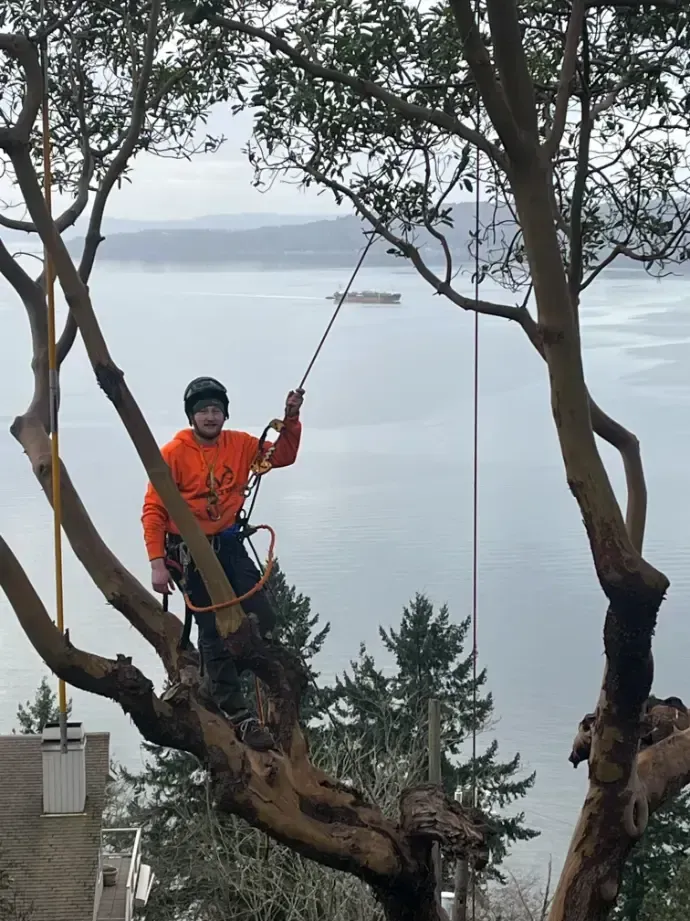
Cabling and bracing systems are installed within the canopy to reduce stress on weak branch unions, codominant stems, or structurally compromised limbs. These systems redistribute mechanical loads and reduce failure potential while allowing for controlled movement.

Best suited for: Weak attachments • Codominant stems/included bark • Risk reduction without removal

Guying (External Stabilization)

Guying systems provide external support by anchoring a tree using tensioned lines. This method is commonly used when root systems are underdeveloped or when trees are exposed to higher wind loads following planting or relocation.

Best suited for: Recently planted/relocated trees • Open exposure sites • Temporary stabilization

Propping (Load-Bearing Limb Support)

Propping provides vertical support beneath heavy or overextended limbs to reduce bending stress and help prevent structural failure. This method is often used for specimen trees or limbs that cannot be reduced without significant impact to tree form or function.

Best suited for: Large overextended limbs • Specimen/heritage trees • When pruning alone isn’t enough

When Tree Support Systems Are Needed

Tree support systems are used when a tree’s structure, environment, or recent changes increase the risk of failure. Our ISA Certified Arborists evaluate tree biology, load distribution, and site conditions to determine if support systems are appropriate — and which type will provide the greatest long-term benefit.

New & Recently Planted Trees

Young or recently transplanted trees may require temporary support while roots establish. Proper staking or guying helps prevent wind throw without restricting natural trunk development.

Mature Trees With Structural Weakness

Trees with codominant stems, weak branch unions, or past failures may benefit from cabling or bracing to reduce movement and redistribute mechanical loads.

Storm-Exposed or Wind-Loaded Trees

Trees in open, elevated, or wind-prone locations are often subject to higher dynamic forces. Support systems can reduce the likelihood of limb or whole-tree failure during severe weather.

Trees Near Homes & Infrastructure

When valuable targets are within fall range, support systems may be used as a risk-mitigation tool to preserve trees while improving safety around structures, driveways, and utilities.

Not sure whether a tree support system is appropriate? Our ISA Certified Arborists provide professional evaluations and recommendations based on ANSI A300 standards.

Steps in Tree Support System Installation

Installing a tree support system (tree cabling, bracing, guying, or staking) starts with a professional assessment and ends with a properly tensioned, correctly placed system designed to reduce risk while supporting long-term tree health. Our ISA Certified Arborists follow ANSI A300 standards and manufacturer specifications for each support type.

Step 1

Assess the Tree & Select the Right System

We evaluate structure, load paths, defects, and targets (homes, driveways, utilities). Then we recommend the most appropriate solution — dynamic cabling, steel bracing, guying, or staking — based on risk, species, and site conditions.

  • Tree structure + defect assessment
  • Risk reduction near structures
  • System selection: cabling / bracing / guying / staking
Step 2

Prepare the Site for Safe Installation

We confirm access, protect landscape and critical areas, and plan safe work zones. For some systems, we may recommend minor pruning or weight reduction to improve balance before installation.

  • Access + work zone planning
  • Target protection (roof, fence, utilities)
  • Optional pruning to reduce mechanical load
Step 3

Install, Tension, & Document the System

Our crew installs the selected support system with proper hardware, anchor placement, and tensioning. We document what was installed and provide guidance on inspection intervals and future adjustments.

  • Correct placement + tensioning
  • Hardware installed per manufacturer specs
  • Documentation + recommended re-inspection

Want an arborist to evaluate your tree first? We provide permit-ready assessments, risk evaluations, and support-system recommendations across the Seattle area.

Explore Certified Arborist Services →

Risks and Precautions in Tree Support System Installation

Installing a tree support system comes with its set of challenges and risks. So here’s how we ensure the safety of both the trees and our team during installation. If you're also thinking about tree removal as an option, learn about our tree removal services and how we prioritize safety and efficiency.


Avoiding Damage to the Tree


Our top priority is the health and well-being of your trees. When installing support systems, we're careful to avoid any damage to the tree's bark, roots, or branches. Using the right tools and techniques, we ensure that the support not only helps the tree but also doesn’t interfere with its natural growth or cause unnecessary stress.


Safety Precautions


The safety of our team and your property is something we take very seriously. We follow strict safety protocols to prevent accidents during the installation of tree support systems. From wearing the proper safety gear to carefully planning each step of the installation process, we make sure everything is done safely and correctly.

Safeguard your trees today! Call us at 206-486-7790 to schedule your tree support system installation.

Frequently Asked Questions (FAQs)

sound tree care logo

Tree support systems are a specialized arboricultural service, and it’s normal to have questions about when they’re needed, how they work, and what to expect. Below are answers to some of the most common questions we receive about tree cabling, bracing, and supplemental support systems. These responses are intended to help homeowners and property managers understand the purpose, safety considerations, and long-term care involved. For site-specific recommendations, an on-site evaluation by an ISA Certified Arborist is always recommended.

  • 1. What types of tree support systems do you offer?

    We offer a variety of tree support systems, including staking, cabling and bracing, guying, and propping. Each system is tailored to meet the specific needs of your trees, whether they're young saplings needing a bit of guidance or mature trees requiring extra stability.

  • 2. How do I know if my tree needs a support system?

    Your tree might need a support system if it's young and not yet stable, has been damaged by weather, shows signs of leaning or weak branches, or is located in a high-wind area. Our team can conduct a thorough assessment to determine the exact needs of your tree.

  • 3. How long does it take to install a tree support system?

    The time it takes to install a tree support system can vary depending on the size of the tree and the type of system being installed. Generally, most installations are completed within a few hours, ensuring minimal disruption to your day.

  • 4. Is it safe to install support systems on mature trees?

    Yes, it's safe to install support systems on mature trees when done correctly. Our team uses techniques that minimize damage and stress to the tree, ensuring that the support system benefits the tree without harming it.

  • 5. Can a tree support system damage my tree?

    When installed properly by professionals, tree support systems do not damage trees. In fact, they're designed to provide stability and support, promoting healthier growth and preventing potential damage from environmental factors.

  • 6. How often do tree support systems need maintenance?

    We recommend inspecting tree support systems at least once a year, but more frequent checks may be necessary after severe weather events. Regular maintenance helps adjust the system as the tree grows and ensures it continues to provide the needed support.

  • 7. Will I need to remove the tree support system eventually?

    In many cases, yes. The goal of a tree support system is to provide temporary support until the tree is strong enough to stand on its own. We'll advise you on the optimal time for removal based on the tree's growth and overall health.


  • 8. How much does it cost to install a tree support system?

    The cost of installing a tree support system varies depending on the type of system needed and the size of the tree. We provide transparent pricing and detailed quotes after assessing your tree's specific requirements, ensuring you understand all costs involved.

Content Authorship & Review

This page is written and reviewed by ISA Certified Arborists to support clear, accurate guidance for homeowners in the Puget Sound region.

Written By
AJ Flanagan, ISA Certified Arborist

AJ Flanigan

Assistant Operations Manager

ISA Certified Arborist (PN-374999A)

AJ supports on-site assessments and practical recommendations for tree pruning, removals, and safety decisions across the Puget Sound region. This page reflects field experience and current arboricultural standards.

Reviewed By
Eric Ledford, ISA Certified Arborist and TRAQ Qualified Tree Risk Assessor

Eric Ledford

Founder, Sound Tree Care LLC

ISA Certified Arborist (PN-9290A) • TRAQ • NUCA Dig Safe

Eric reviewed this page for accuracy and alignment with ISA best practices, ANSI A300 guidance, and common municipal permitting considerations in the Puget Sound region. This content is informational and not legal advice.

Concerned About Tree Stability or Structural Weakness?


Tree support systems are designed to reduce risk while preserving valuable trees. If you’re noticing weak branch unions, heavy lateral limbs, storm exposure, or a tree that needs added structural support, Sound Tree Care LLC can help. Our ISA Certified Arborists evaluate tree structure, load factors, and site conditions to determine whether cabling, bracing, guying, or propping is the most appropriate solution. All systems are installed using arborist best practices to improve safety without compromising long-term tree health.


 βœ” Tree Cabling & Bracing Systems
βœ” Guying for Newly Planted or Wind-Exposed Trees
βœ” Temporary & Permanent Tree Propping
βœ” Structural Risk Evaluation by ISA Certified Arborists
βœ” ANSI A300–Compliant Installation Methods


⭐ ISA Certified Arborists | TRAQ-Qualified
⭐ Licensed, Bonded & Insured
⭐ Code-Compliant, Tree-Focused Solutions
⭐ Trusted by Homeowners & Property Managers


πŸ“ž Call us now at 206-486-7790 – Speak with a local arborist!
πŸ“ Request a Tree Support System Evaluation:
Client Hubο»Ώ