Seattle Tree Preservation & Urban Arborist Consulting
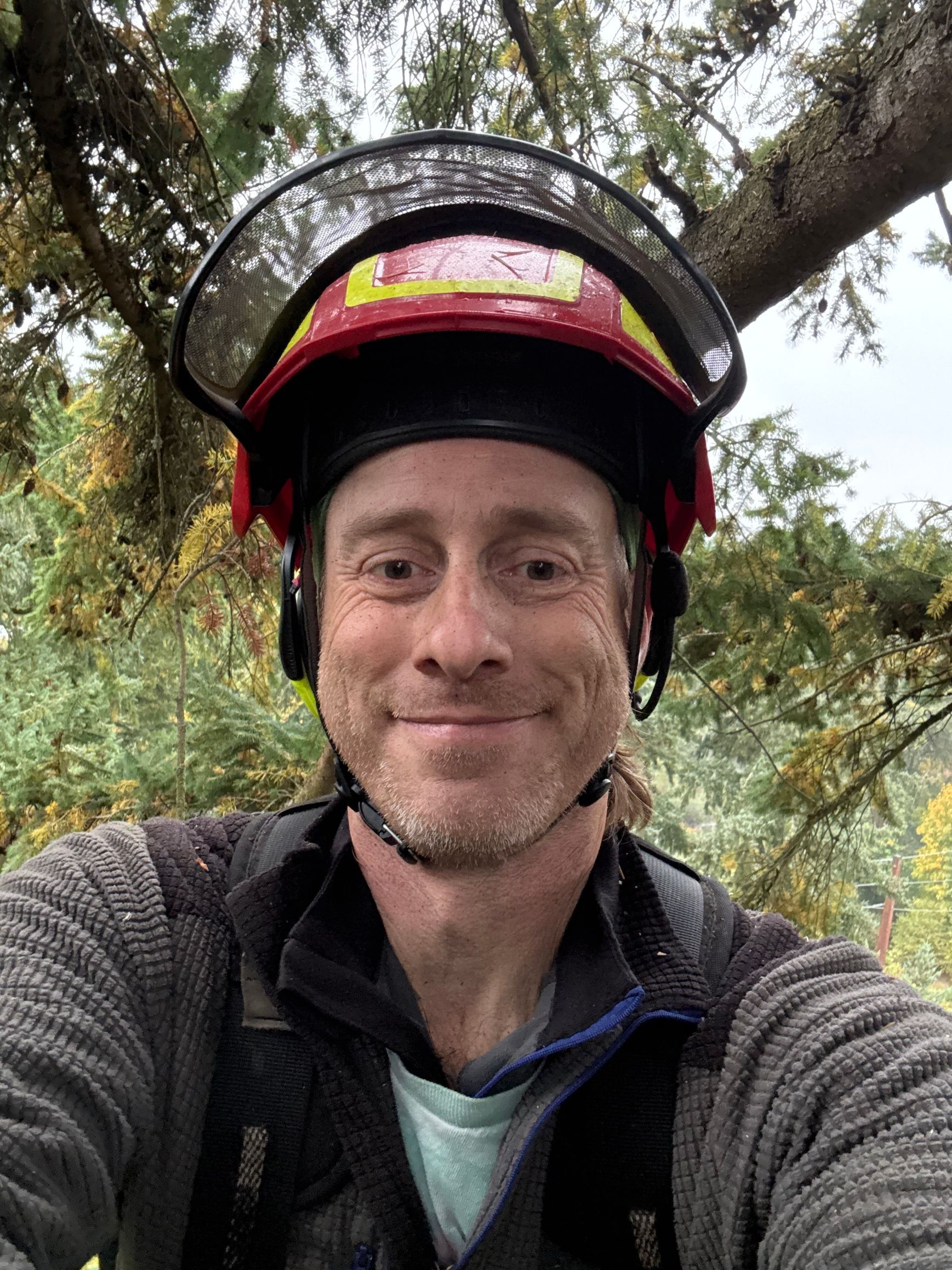
Written By: Eric Ledford
ISA Certified Arborist – PN-9290A
ISA Qualified Tree Risk Assessor (TRAQ)
Updated January, 24, 2026
Tree preservation in Seattle isn’t just about keeping trees—it’s about making informed, defensible decisions in a dense urban environment shaped by tree code, construction constraints, and real-world site conditions. Sound Tree Care provides arborist-led guidance for projects involving mature, regulated, or high-risk trees, helping homeowners, builders, and property managers determine when preservation is feasible, when mitigation is appropriate, and when removal is unavoidable. Our ISA Certified Arborists deliver clear, site-specific evaluations that support responsible tree decisions across Seattle and the Puget Sound region.
Our Approach to Seattle’s Tree Preservation
At Sound Tree Care, we recognize the distinct challenges that urban trees face in Seattle and the Pacific Northwest. From soil quality to extreme weather fluctuations, each factor plays a role in the overall well-being of your trees. Our approach focuses on site-specific evaluation, realistic preservation strategies, and clear documentation that accounts for Seattle’s urban constraints. Our goal is to enhance tree growth, prevent diseases, and elevate the visual appeal of your property.
In Seattle, tree preservation decisions come down to three defensible paths: preserve where feasible, mitigate where impacts are unavoidable, and remove when safety or site constraints leave no reasonable alternative.
The Challenges Urban Trees Face in Seattle
Urban trees are long-lived organisms trying to survive in environments that are constantly changing around them. In Seattle, many trees were planted decades—or even generations—before current patterns of development, traffic, and infrastructure were established. Over time, these changes place increasing stress on the parts of the tree we can’t see, particularly the root system.
Soil Compaction and Root Stress
One of the most significant challenges urban trees face is soil compaction. In cities, root zones are routinely walked on, driven over, parked on, and built across for years or decades at a time. Compacted soil restricts oxygen, water infiltration, and root growth, gradually reducing a tree’s ability to support itself and respond to stress.
Construction and Development Impacts
Construction and development are among the leading causes of tree decline in urban environments.
- Trenching and utility installation
- Grade changes and excavation
- Root severance inside the critical root zone
- Repeated site disturbance over time
Pollution, Runoff, and Altered Drainage
Urban trees are also exposed to pollution, runoff, and altered drainage patterns that don’t exist in natural forest settings. Roadway pollutants, compacted fill soils, and redirected stormwater can change soil chemistry and moisture levels in ways trees are poorly adapted to tolerate.
Limited Soil Volume in Urban Planting Areas
In many Seattle neighborhoods, trees are planted in highly constrained soil volumes, such as narrow planting strips between sidewalks and streets. These spaces may provide only a few feet of usable soil—dramatically less than the continuous, uncompacted soil found in forests or open land. As trees mature, this limited root space increases the likelihood of conflicts with pavement, infrastructure, and nearby development.
Why This Matters for Preservation Decisions
Understanding these cumulative pressures is essential when evaluating whether a tree can realistically be preserved, what mitigation measures are effective, and when removal becomes the safest or most responsible option.
Seattle Tree Preservation Under Seattle’s Tree Code
In Seattle, “tree preservation” isn’t just best practice—it often intersects with code requirements, permit conditions, and construction standards. Our role is to help you protect the trees you want to keep while staying compliant with City rules and realistic site constraints.
Tree Protection Zones (TPZ)
We identify practical protection zones around retained trees and translate them into clear site guidance (fencing, access limits, no-dig areas, and root protection measures) so contractors can actually follow the plan.
Street & Regulated Trees
Seattle’s rules can treat certain trees differently based on size, species, and site context. We help you understand which trees are likely to trigger additional review and what preservation typically requires.
Permits, Reports, and Plan Review
When projects involve development, additions, grading, or tight setbacks, an arborist report or preservation plan may be needed to document impacts and outline mitigation steps.
When You Need an Urban Arborist in Seattle
Urban tree preservation gets complicated when projects intersect with tight lots, permit triggers, or construction impacts. These are the situations where an ISA Certified Arborist can save you time, money, and headaches.
Home addition or DADU near mature trees
If your build footprint, excavation, or access route comes close to a tree’s critical root zone, you need a realistic plan. We evaluate expected impacts, outline protection measures, and help you avoid accidental damage that leads to decline later.
Permit-driven projects that require arborist documentation
Some Seattle projects are more likely to trigger tree review, tree protection notes, or supporting documentation. We provide clear reports and preservation guidance you can share with designers, builders, and reviewers.
Working around Exceptional or regulated trees
When tree size/species/site factors raise the stakes, preservation planning needs to be deliberate. We document condition, constraints, and practical options so your team understands what’s feasible before you break ground.
Construction staging, access, and temporary impacts
Trees don’t just get damaged by the dig—often it’s parking, storage, repeated traffic, or grade changes. We identify site logistics that silently wreck roots and provide alternative staging guidance that contractors can follow.
Slope, ECA, or sensitive site conditions
On steep or constrained sites, trees face higher failure potential and lower tolerance for disturbance. We assess stability factors and provide mitigation options that match Seattle’s environmental realities.
Root conflicts with sidewalks, driveways, or foundations
When roots and hardscape collide, quick fixes can backfire. We assess whether selective pruning, re-routing, or protection strategies are viable—or whether the tree’s long-term outlook makes preservation unrealistic.
Tree decline after construction or site changes
If a tree starts thinning out, dropping limbs, or showing stress after grading, trenching, or soil compaction, early diagnosis matters. We identify likely causes and prioritize actions that give the tree the best chance to recover.
You need a defensible decision: preserve, mitigate, or remove
Sometimes the most valuable service is clarity. We’ll tell you what can be preserved, what can be mitigated, and what should be removed—then document the reasoning so you’re not guessing.
How Arborists Ensure the Health and Longevity of Urban Trees
Preserving trees in Seattle requires more than routine maintenance. Urban trees face compacted soils, limited root space, construction impacts, changing drainage, and increased exposure to wind and weather. Our approach starts with evaluating these site-specific constraints so preservation strategies are realistic, defensible, and appropriate for both the tree and the project.
As ISA Certified Arborists, we assess tree condition, structure, and tolerance for disturbance before work begins. This allows us to prioritize root zone protection, canopy management, and mitigation measures that reduce long-term stress and failure risk—especially on tight lots, sloped sites, and active construction projects.
When preservation is feasible, we provide clear, practical guidance that homeowners, builders, and designers can follow. When it isn’t, we explain why. The goal isn’t to promise outcomes—it’s to support informed decisions that protect people, property, and Seattle’s urban canopy over time.
Arborist Reports & Tree Preservation Plans
For projects in Seattle, strong documentation matters. We provide clear arborist reports and preservation guidance that help homeowners, builders, and design teams make defensible decisions and avoid preventable tree conflicts.
Arborist Reports (Permits & Development)
Inventory, condition, constraints, and impact narratives—written to support plan review and communicate what’s changing on site and why it matters.
Preservation Plans (Construction Guidance)
Practical protection measures for roots and canopy, contractor-friendly notes, and on-site recommendations to reduce damage during access, excavation, and staging.
Risk & Mitigation Options
When a tree has structural concerns, we outline realistic mitigation pathways (pruning, support systems, monitoring, or removal when warranted) backed by ISA/TRAQ methodology.
What You Get
- Clear scope: what’s being evaluated and what’s not
- Photo documentation and site observations
- Actionable recommendations (not generic advice)
- Preservation priorities and practical constraints
- Documentation you can share with designers, builders, and reviewers
Tree Preservation vs. Tree Removal in Seattle
Tree preservation is often achievable—but not always. The right decision depends on tree condition, site constraints, and how much disturbance is unavoidable during construction or access.
Preservation is more realistic when:
- The retained tree has strong vigor and low existing defects
- Excavation and access can stay out of high-value root zones
- Protection measures can actually be enforced on site
- Grade changes and drainage impacts can be avoided
- The scope allows careful sequencing and supervision
Removal becomes more likely when:
- The tree has significant decay, structural defects, or declining vigor
- Construction requires major root severance or repeated compaction in the root zone
- Site constraints force staging, access, or grade changes that can’t be mitigated
- Targets are high-value and failure consequences are severe
- Long-term conflicts are already causing damage
The Benefits of Seattle’s Tree Preservation
Seattle tree preservation is about more than “saving trees.” It’s about protecting canopy, avoiding preventable damage during construction, and keeping healthy urban trees viable in tight lots and challenging site conditions.
- Healthier urban trees on constrained Seattle sites: Preservation-focused pruning, soil improvement, and root zone protection help trees tolerate compaction, limited soil volume, and changing drainage conditions common in Seattle neighborhoods.
- Fewer construction conflicts and better tree protection outcomes: A practical preservation plan reduces root damage from excavation, staging, and access routes—helping avoid decline after a remodel, addition, or utility work.
- Stronger documentation for permit and review conversations: When a project touches regulated or significant trees, clear arborist guidance and tree protection notes make it easier for homeowners, builders, and reviewers to align on feasible protection measures.
- Lower risk of storm damage and branch failure: Proactive canopy management and structural support recommendations can reduce failure likelihood in wind and heavy rain—especially for trees with defects, overextended limbs, or prior damage.
- Long-term property value and neighborhood canopy: Mature trees support curb appeal, shade, and privacy while preserving the character of Seattle streetscapes and contributing to broader canopy goals.
🌲 Ready for a Clear, Defensible Tree Preservation Decision?
Whether you’re planning a project near mature trees, navigating Seattle’s tree code, or deciding whether a tree should be preserved, mitigated, or removed, Sound Tree Care provides experienced arborist guidance you can rely on.
Our ISA Certified Arborists deliver practical, site-specific evaluations and documentation to support informed, defensible decisions across Seattle and the surrounding Puget Sound region.
Why Homeowners & Property Managers Trust Us
- 🎖️ ISA Certified Arborists, TRAQ-Qualified
- 🏙️ Seattle Registered Tree Service Provider
- 🪪 Fully Licensed & Insured in Washington State
- ⭐ 5-Star Rated on Google, Yelp & Facebook
- 🧭 Locally trusted since 2018
📞
Call
206-486-7790
📬 Request an Arborist Site Visit
Online Form